このガイドは、アジア太平洋地域における主要なデータセンター拠点37か所を追跡調査し、土地取得、土地造成・解体工事、基礎工事、設備工事を含むコストの包括的な内訳を示しています。アジア太平洋地域のデータセンター市場の状況を包括的に分析し、同地域のデータセンターセクターを形成する主要なトレンドも取り上げています。クッシュマン・アンド・ウェイクフィールドがデータセンター開発コストデータを公表するのは、今年が初めてです。.
私たちとつながる


私たちとつながる
都市部とその設計、計画、開発、そして運営は、私たちの生活様式の変化と気候変動に対応するための変革をもたらす上で、これまでも、そしてこれからも、大きな役割を果たし続けるでしょう。持続可能な都市環境につながる、有益な生活と都市環境の持続可能性の向上を実現するために、本報告書では以下のトピックを取り上げます。
要点
持続可能性を高め、歩きやすく持続可能な都市環境をもたらす有益な都市環境の持続可能性の変化をもたらすために、アジア太平洋地域の都市が採用し、実施することを検討できる概念の 1 つが「15 分都市」コンセプトです。.
15 分都市は、都市環境の持続可能性と都市の住みやすさの両方を促進する新しいコンセプトです。.
アジア太平洋地域の都市公共空間を持続可能な15分圏内の都市環境との関連で具体的に検討する場合、地方自治体の目標は、経済的にも実現可能な、包括的で市民に優しい環境を生み出すことです。.
持続可能な15分圏内の都市環境を相互接続するには、アジア太平洋地域を含む一般的な都市にとって、アクセスしやすく便利で、すべての住民にとって移動時間と大気汚染レベルの両方を削減できる、よく計画された効率的な総合的な公共交通システムを持つことが不可欠です。.
15分都市構想では、都市農業による食糧生産の増大の必要性も重視されています。.
最後に、徒歩15分圏内の都市内の建物を含むアジア太平洋地域の建物のエネルギー使用量と二酸化炭素排出量を削減するためには、さらに次のステップとしてカーボンニュートラルの実現が重要となり、「カーボンバランス」を確立する必要があります。.
シンガポールの小売Eコマース市場は、2022年から2027年にかけて9兆9100億米ドルの年平均成長率(CAGR)で成長し、2022年の1兆4000億米ドルから2027年には1兆4000億米ドルに成長すると予測されています。ショッピングフェスティバル、ライブセリング、オンライン食料品ショッピングといった新たなトレンドは、企業にとって物流サプライチェーンの管理において特有の課題をもたらしています。オムニチャネル小売モデルの導入やラストワンマイル配送の3PLへのアウトソーシングにより、戦略的に配置された倉庫の必要性が極めて高まっています。.
このレポートは、物流セクターが電子商取引の需要をどのように捉えることができるか、また、物流不動産ポートフォリオの将来性を確保しようとする地主や入居者への潜在的な推奨事項を説明することを目的としています。.
炭素削減期限が迫り、規制が厳しくなる中、より多くの企業が、排出量を測定、監視、管理し、将来の持続可能性に関する決定を導くために、急速に進化するテクノロジーを採用しています。.
JLLが1,000社を対象に実施した調査によると、今後3年間でテナントと投資家の双方にとって、サステナビリティ関連テクノロジーがテクノロジー予算増加の最大の割合を占めると予想されています。テナントの3分の2以上が、サステナビリティの進捗状況を管理・報告するテクノロジーが予算上の最優先事項であると回答しています。.
世界全体では、調査対象となった45%のテナントと62%の投資家が、今後1年間でエネルギーまたは排出管理テクノロジーを導入する予定です。さらに62%の投資家は、サステナビリティのモニタリングと報告を支援するテクノロジーに関心を示しており、ポートフォリオ計画における気候リスクの評価は新興分野となっています。.
“「テクノロジーは、ポートフォリオ内のリスクのフラグ付けから日常業務の監視まで、企業がネットゼロ目標の達成状況をより深く理解するための重要な要素です」と、JLLのテクノロジープラットフォーム - スマート&サステナブルビルディング担当副社長、ラムヤ・ラビチャンダールは述べています。.
“「現在、企業の持続可能性報告と管理のニーズに対応し、カリフォルニア州の新しい気候企業データ説明責任法などの今後の情報開示規制に準拠できるようにするための成熟した市場があります。」’
COVID-19の発生から3年以上が経過し、シンガポールの小売売上高は回復し、パンデミック前の水準を上回っています。しかしながら、来店客数と店舗賃料はまだ完全には回復していません。CBRE独自の調査によると、消費者はショッピングモールへの来店頻度は減少しているものの、滞在時間は増加しています。また、eコマースの普及、所得水準の上昇、そしてウェルネスとESGへの関心の高まりを背景に、消費パターンも変化しています。.
本レポートは、パンデミック後のシンガポールの商業不動産市場を形成する主要なトレンドを特定し、シンガポールの小売市場の構造変化と景気循環の回復を乗り切るためのテナントおよびオーナーへの提言を提供します。政府の施策、観光客の消費回復、そして立地の選択肢の拡大も、すべてのステークホルダーに機会をもたらしています。.
主な調査結果:
不動産市場は、過去2年間の世界的なインフレと金利上昇により、大きな変化を経験しました。さらに、このセクターは技術革新による変革を遂げており、市場参加者の見通しと期待も変化しています。持続的なインフレ圧力に対応するため、アジア太平洋地域の規制当局は、2024年度第2四半期において、不動産市場の安定性と健全性を守るための様々な措置を講じました。.
地域全体に共通するテーマの一つは、取引の透明性と説明責任の向上を目的とした、より厳格なマネーロンダリング対策規則の導入です。例えば、オーストラリア、インド、シンガポール、日本はいずれも、不動産セクターにおけるマネーロンダリング対策として、新たな規制や強化された規制を導入しています。.
アジア太平洋地域の不動産市場を形作っているもう一つのトレンドは、環境の持続可能性と社会的責任への関心の高まりです。多くのデベロッパーや建設業者は、グリーンテクノロジーや環境配慮型事業をプロジェクトに取り入れることで、ネットゼロ目標を掲げ、ESGへの取り組みを強化しています。これは、事業運営による環境負荷を軽減するだけでなく、エネルギー効率の向上とエネルギーコストの削減によって、顧客やステークホルダーにとっての価値創造にもつながります。つまり、テクノロジーを活用した取り組みと戦略を連携させることで、より回復力と競争力のある市場を創出しているのです。.
これらの動向は、APAC地域が住宅・商業不動産セクターの投資家とデベロッパーにとって、新たな機会と課題の時代を迎えつつあることを示しています。オーストラリア、インド、日本、中国、シンガポール、香港における規制の改正は、変化する市場環境と期待に対応するための枠組みと指針を提供しています。また、これらの規制は、多様な不動産投資の幅広い展望と可能性を秘めた、この地域の多様性とダイナミズムを反映しています。.
APREA Real Assets Bulletinの今回の号では、不動産のグリーン変革に関する規制の最新情報、不動産取引を効率化するために採用されたテクノロジー主導の戦略と取り組み、および不動産セクターを保護するためのマネーロンダリング防止措置を通じてアジア太平洋経済圏が実施しているリスク軽減措置について取り上げました。.
アジア太平洋地域の電気自動車(EV)市場は過去2年間で大幅に成長し、2022年には世界のEV販売のほぼ3分の2をこの地域が占めることになります。.
EVの普及が加速するにつれ、アジアでは公共充電インフラの需要も急速に増加しています。これは主に、規制上の制限や行政上の障壁により、個人用充電器の設置が制限されるアパートが増えているためです。.
アジア太平洋地域におけるEVの増加に伴い、充電施設の大幅な増加が求められています。CBREは、アジア太平洋地域全体の公共充電ポイントの数は、2022年の約200万カ所から2030年までに約1,000万カ所に増加すると予測しています。.
これらすべての収束傾向は、不動産所有者や投資家にとって、EV公共充電インフラ市場へのアクセスを獲得したり、その存在を拡大したりする大きな機会をもたらします。.
本レポートは https://www.cbre.com/insights/reports/how-will-electric-vehicles-impact-real-estate-in-asia-pacific
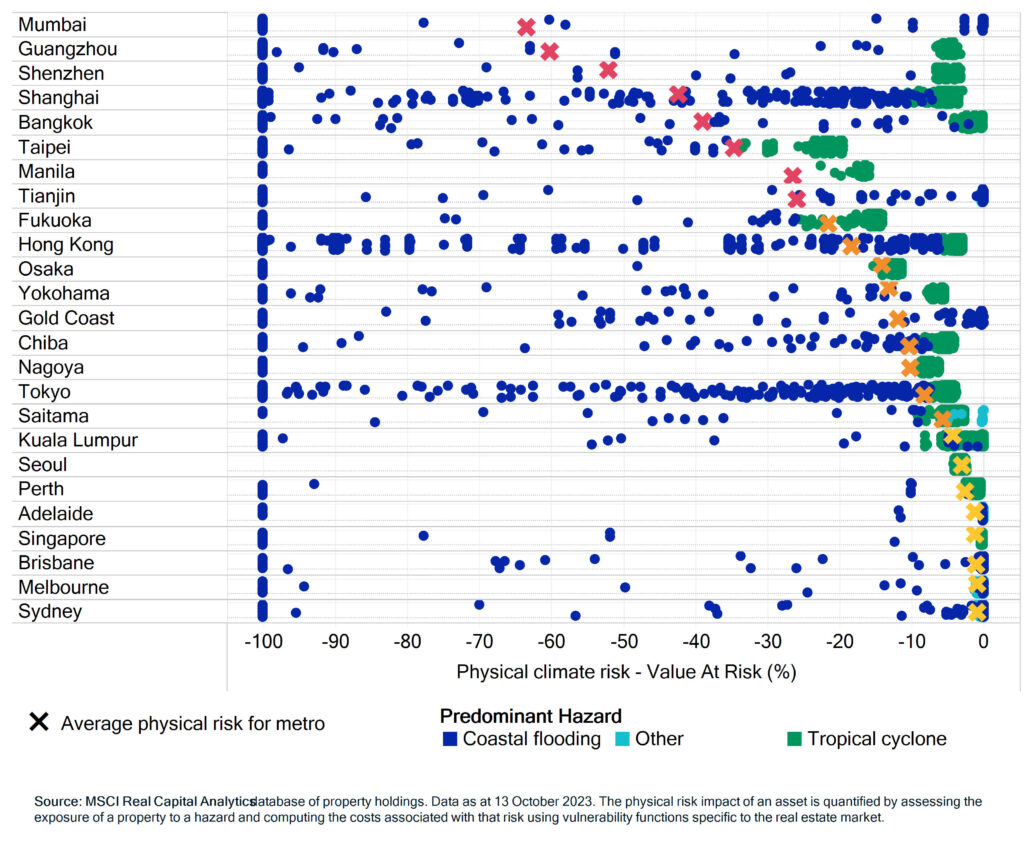
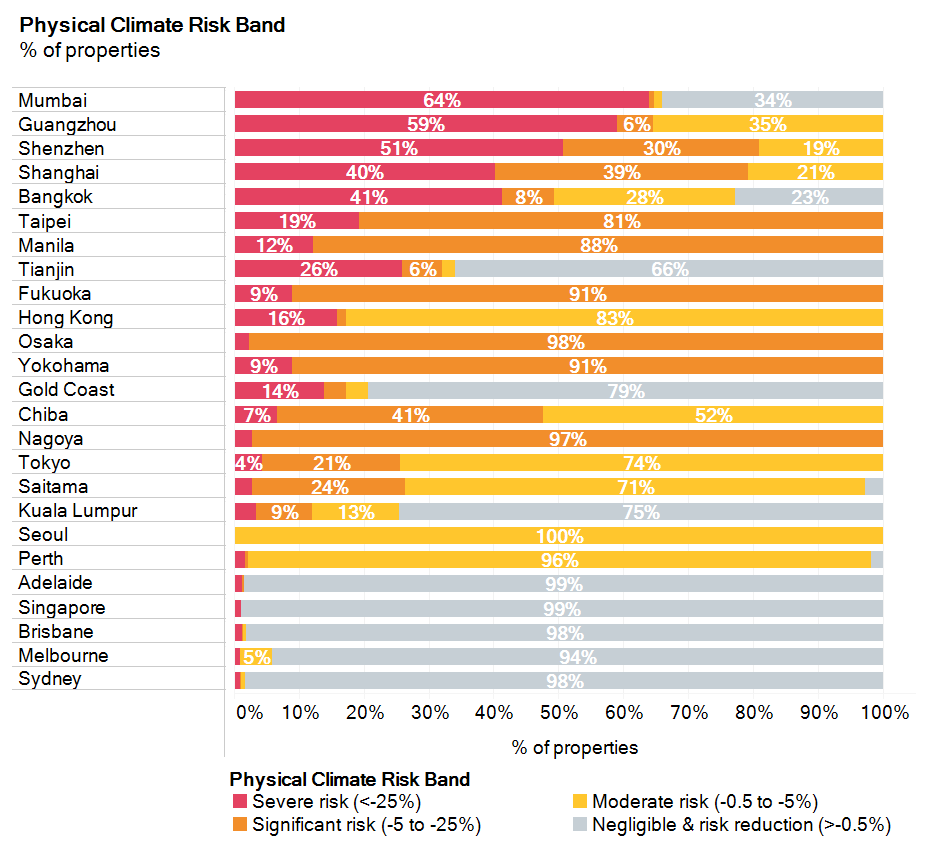
MSCIのリアル・キャピタル・アナリティクスによる世界の不動産保有データベースに気候分析を適用すると、アジア太平洋地域の一部の都市における不動産全体にわたる、幅広い物理的気候リスクが集約的に現れていることがわかります。以前、世界の都市について示したように、これらのリスクは各都市内で均等に分布しているわけではありませんでした。.
再び、場所と地形が物理的な気候変動の影響の決定的な要因であることがわかり、投資家は市場レベルのデータだけに頼るのではなく、個々の資産レベルで気候リスクを考慮する必要があるという考えが強化されました。.
以下のグラフは、アジア太平洋地域の主要都市における平均的な物理的リスクとリスク分布を示しています。
都市レベルと資産レベルの平均
%のプロパティ

副社長
MSCIリサーチ ×

副社長
MSCIリサーチ
ニール・ハームスは不動産ソリューション・リサーチチームに所属しています。資産保有者および投資運用会社向けのパフォーマンス測定、ポートフォリオ管理、リスク関連リサーチに重点を置いています。MSCI入社前は、オールド・ミューチュアル・プロパティで投資アナリスト、インベストメント・プロパティ・データバンクでリサーチアナリストを務めていました。ヨハネスブルグ大学で経済学の商学士と計量経済学の商学士(優等)を取得しています。.
世界経済フォーラムによると、2050年には現在の建物の80%が消滅すると予想されています。建築環境は世界のCO2排出量の約40%を占めています。改修は、既存の建物をよりスマートで効率的にし、CO2排出量を削減するための、最も資本集約度の低い方法です。また、建物の設計における現在のパラメータの範囲内で、財務的な成果、資本、運用上の変更を促進する効果的かつ効率的な方法でもあります。.

2022年9月、カントリー・ディレクターとしてロングライフ・パートナーズ・ジャパンに入社。東京を拠点とし、日本、アジア太平洋地域、そしてそれ以外における全ての業務と活動を監督する。金融業界で16年以上の経験を持ち、不動産とクレジット投資を専門とする。ロングライフ・パートナーズ入社以前は、農林中央金庫でポートフォリオ・マネージャー、センターポイント・デベロップメントでインベストメント・マネージャーを務めた。.
河合建武
マネージング・ディレクター
長寿パートナー