隨著靈活辦公空間和混合辦公環境的興起,商業房地產行業正面臨著不斷變化的格局。希望從這些變化中獲利的業主和營運商必須投資於能夠優化用戶體驗並縮短價值實現時間的技術。.
這本電子書將介紹商業業主和多地點靈活辦公空間提供者在為其業務組合投資新技術解決方案時的決策流程,並列舉常見用例:
- 辦公室軟體和技術投資的考量因素
- 確定對整合數位基礎設施平台的需求
- 評估數位基礎設施提供者的優勢,確保建立成功的合作夥伴關係
- ADAPT 整合數位基礎設施平台的常見特性和用例

伯尼·德瓦恩,Yardi公司資深區域總監
“如果我能用手機追蹤披薩的運送情況,為什麼不能期待快速便捷的租車體驗呢?”
這個問題——或者說它的各種變體——是由全新一代的租屋者提出的,他們對客戶服務的期望與他們的父母那一代截然不同。.
在資訊瞬息萬變的時代,電子商務讓我們隨時隨地都能購物,租屋者不再願意把周六的時間浪費在奔波看房或填寫幾十份租屋申請表上。他們不希望再與那些還停留在傳統模式的房地產經紀人和物業經理打交道。他們也不明白,為什麼每月支付最大的開支——房租——卻不能是一種積極、個人化的互動體驗。.
無論是虛擬看房還是人工智慧客服機器人,科技都能讓租屋流程更加便利。儘管房地產科技發展迅猛,許多房地產公司仍沿用傳統的營運模式;這意味著從最初的看房到最終搬離,租客都會面臨許多痛點。.
但隨著「租屋世代」對更優質租賃體驗的需求日益增長,租賃住宅產業的領導者正在積極回應。最精明的營運商借助由尖端智慧技術驅動的平台,提供更優質的客戶服務和更優惠的租賃價格。.
Yardi 最新發行的白皮書, 更好的租賃, 該報告探討了「先建後租」(BtR)產業的機遇,並概述了三個最容易解決的客戶痛點。報告中重點介紹了澳洲「先建後租」專家Arklife,該公司揭示了其正在自動化的一些流程,旨在簡化客戶流程。.
由於BtR的設計理念以租戶為中心,每個項目都經過精心設計和規劃,旨在提供更優質的租賃體驗。例如,禮賓服務和高品質的公共設施、租戶可以自由選擇粉刷牆壁或飼養寵物、靈活的租賃條款和租期保障,以及專業的物業管理和維護。.
在美國、歐洲和英國,租賃住房模式已相當成熟,在這些地區被稱為多戶住宅。在英國,租賃房屋佔現有房屋存量的2,100萬至300萬套,而在美國,這一數字高達1,2,100萬至300萬套。其他市場,例如澳大利亞,則仍處於起步階段。但產業分析師預測,未來十年內,澳洲的租賃住房供應量可能達到17.5萬套。.
Arklife 的總經理 Scott Ponton 向所有希望改善客戶體驗的租賃住宅運營商傳達了一個明確的信息:“沒有一種技術方案可以解決所有問題。房地產科技不會停止發展,因為客戶的痛點也在不斷變化。一個痛點解決了,另一個痛點又會冒出來。我們的重點是傾聽客戶的聲音,並利用技術來解決這些問題。”
最重要的是,業者需要開始將建築物視為類似手機的設備。當我們用這種視角審視建築物時,就能更專注於使用者體驗。使用者介面和功能如何?我們的設備將由哪些硬體和軟體驅動?哪個平台能幫助我們打造最佳使用者體驗?
雖然一些「先建後租」業者拼湊出各種解決方案,但最精明的「先建後租」專家正在採用單一的端到端平台。例如,在美國,每月有800萬人透過Yardi支付房租,從租賃到維修,所有環節都旨在提供無縫的客戶體驗。.
我們的建築遠不止是磚瓦水泥。它們是能夠提升生產力、績效和人類經驗的工具。這種思維方式的轉變將改變建築的設計方式、服務的提供方式、資產的價值評估方式,以及最重要的,顧客對空間的期望。.
新加坡的碳稅將從目前的每噸碳排放量 SG$5 逐步提高到 2030 年的 SG$50-80。.
根據新提出的稅收標準,首批稅款將於2025年繳納,稅額基於2024年的排放量。大型設施將受到最大影響,但終端能源消費者也將感受到稅負增加。.
降低能源消耗風險的有效途徑有很多,無論是對營運成本(設施)還是終端能源使用者都是如此。設施應考慮透過建築控制、結構改造以及資本支出(CAPEX)中高效的建築服務和設施,將能源效率和碳排放效率融入營運之中。.
同時,可以透過提供補貼和經濟誘因來抵消終端能源用戶暴露量的減少。.
請閱讀全文: https://www.cushmanwakefield.com/en/singapore/insights/singapore-carbon-tax-2022
新加坡已宣布解除 2019 年暫停興建新數據中心的禁令,然而政府對能源效率和消耗的關注意味著新設施將需要符合嚴格的標準。.
短期內,新數據中心的數量將相當有限,在今年第二季開始的新死後試驗階段中,最多只能核准三個,為期 12-18 個月。新數據中心的用電量也會有上限:都必須在 10MW 到 30MW 之間。.
第一太平戴維斯亞洲區工業與物流業總監 Jack Harkness 表示:「暫停與允許興建新數據中心的政策終止是個好消息,對永續發展的重視也是如此,然而在這個試點階段只有三家獲得批准,競爭將會非常激烈。」“
由於擔心數據中心的用電量,新加坡政府於 2019 年暫停興建新的數據中心。目前,新加坡共有 70 個數據中心,總容量達 1000MW;該行業的用電量約佔新加坡總用電量的 7%。.
然而在一月份,貿易和工業部部長 Gan Kim Yong 說道:“儘管我們繼續歡迎數據中心投資,但我們打算對我們可以容納的 DC 進行更多選擇。特別是,我們尋求錨定那些在資源效率方面一流的 DC,它們可以為新加坡的經濟和戰略目標做出貢獻“。 稍後的線上會議概述了政府對新中心的要求。.
資料中心使用電力為內部運作的伺服器供電,更重要的是讓伺服器保持冷卻,因為成千上萬的伺服器持續運作會產生大量熱能。.
資料中心的效率可以用電力使用效率 (Power Usage Effectiveness, PUE) 來衡量,這是一種透過計算整體使用的能源與 IT 設備單獨使用的能源之比,來評估設施能源效能的指標。滿分是 1。新加坡將要求新的資料中心的 PUE 達到 1.3 或更低。一般資料中心的 PUE 約為 1.5-1,7,而澳洲和南韓等地的最新資料中心的目標 PUE 則為 1.2-1.4。.
政府官員表示,在新加坡建設和營運數據中心有良好記錄的申請人將獲得優先考慮。他們補充說,長遠而言,新加坡決心繼續成為數據和連接中心。.
隨著數據中心開發商和運營商爭相在暫停期間成為三個獲批數據中心之一,暫停期的結束預計將激起申請熱潮。“Harkness 表示:「我們預計市場上已有的開發商和營運商將會為有限的許可權進行激烈的競爭。Harkness 表示:「我們也可能會看到私募股權房地產基金與營運商成立合資企業,就像我們在澳洲和南韓看到的情況一樣。.
“新加坡數據中心市場將進入一個新時代,在這個時代,效率至關重要。從長遠來看,隨著具有較低 PUE 的較新設施陸續投入使用,我們可能會看到對質量的追求。這將為舊數據中心的重建創造機會。”
改進後的原則是根據產業參與者的回饋意見制定的,強調了管理成果的重要性。.
2022年3月31日,新加坡-亞洲盡責管理中心(SAC)今日發布了第二版《新加坡負責任投資者盡責管理原則》(SSP),旨在更新相關實踐,以改善新加坡的投資環境。此次修訂由一個十人指導委員會主導,並得到了新加坡金融管理局(MAS)和新加坡交易所(SGX)的支持。.
新加坡於2016年首次推出這些原則,概述了與盡責管理相關的核心行為和行動,旨在促進積極負責的投資。此後,隨著全球對金融投資對經濟、社會和環境影響的關注日益加劇,資本市場經歷了深刻的發展。利害關係人強調,投資人應透過展現為客戶和受益者創造永續績效和長期價值的真誠意願,以及將環境、社會和治理(ESG)因素納入考量,來更好地履行其盡責管理職責。指導委員會在製定這些原則時充分考慮了全球市場的發展趨勢。 2021年3月,委員會進行了一項行業調查,以收集資產管理行業對投資盡責管理的看法。隨後,在2021年11月,委員會就更新後的《新加坡盡責管理原則》(SSP)草案進行了公開諮詢,以徵求利害關係人的意見。.
“「我們收到了來自20多個利益相關方的反饋意見。這些建議已被納入考量,以加強內部結構和治理、上市公司以外的盡責管理以及ESG(環境、社會和治理)方面的原則。我們敦促金融服務和投資行業採納更新後的SSP,並加大對責任投資的承諾,」SAC首席執行官Rajeev Peshawaria表示Rajeev Peshawaria表示。.
作為一項由產業主導的倡議,遵守這些原則仍屬自願。然而,根據強化後的可持續供應鏈計畫(SSP),強烈鼓勵簽署者每年向指導委員會秘書處提交其管理工作的證據。.
新加坡金融管理局(MAS)執行董事兼市場政策及基礎設施部主管吳慧玲表示:「MAS支持新加坡資產管理諮詢委員會(SAC)及業界共同努力更新《新加坡盡責管理原則》。有效的盡責管理需要包括資產所有者、資產管理公司和服務提供者在內的市場參與者採取多方利益相關者參與的方式。負責任的投資盡責管理有助於管理有助於提提升公司治理標準,推動積極變革,並為所有利益相關者創造可持續的長期價值——不僅對單一公司或投資者而言如此,對更廣泛的經濟、環境和社會亦是如此。“
“「新加坡交易所支持更新後的《新加坡負責任投資者盡責管理原則》。機構投資者透過其投資策略,在公司資本配置中發揮著重要作用。機構投資者可以透過積極的盡責管理和投資決策來影響其投資組合公司的實踐。鑑於市場日益關注環境、社會和治理(ESG)因素及其成果,這一點尤為重要。我希望,隨著市場日益關注環境、社會和治理(ESG)因素及其成果,這一點尤為重要公司。.
包括資產管理公司和資產所有者在內的行業參與者對更新後的原則表示歡迎和支持。.
貝萊德亞太區投資盡責主管Amar Gill表示:「更新後的《新加坡盡責管理準則》(SSP)及其對盡責管理和公司治理的強化,反映了國際發展趨勢和本地趨勢,是新加坡構建積極投資生態系統的可喜舉措。該準則的指導將有助於像我們這樣的基金經理以及公司保護和促進像我們客戶這樣的長期投資者的經濟利益」。“
摩根大通資產管理(JPMAM)新加坡及東南亞區首席執行官Sherene Ban表示:「積極所有權是我們積極管理傳統的組成部分,我們不斷完善可持續投資策略,以滿足客戶和監管機構不斷變化的需求。這些更新後的原則,包括定期監控投資、通過建設性和目標的互動保持積極性,以及在履行受託責任時協作資產的方式相一致。“
新加坡保誠執行長陳德明表示:「在推動永續發展的道路上,每個人的聲音都至關重要。我們很榮幸成為永續發展策略(SSP)的簽署方,因為其原則與我們負責任的投資理念不謀而合。透過與投資組合中的公司積極互動,我們力爭在2050年實現淨手攜帶。“
Maitri Asset Management是一家多元家族辦公室,其執行長Manish Tibrewal表示:「鑑於ESG(環境、社會和治理)問題的複雜性,定期溝通與協作是我們與投資組合公司互動的重要組成部分。在Maitri,我們始終遵循行業領先標準,與投資組合公司保持密切聯繫。這使我們能夠以透明的方式交流,並始終進一步保持我們的投資方式在管理企業方面。“
有關更新後的原則(也稱為 SSP 2.0)的更多信息,請點擊此處。 這裡.
###
關於亞洲管護中心(SAC)
SAC是由淡馬錫設立的非營利組織,致力於透過研究、高階主管培訓和參與活動,幫助企業和政府領導人、投資者和個人實踐盡責管理。我們對盡責管理的定義是:透過整合利害關係人、社會、子孫後代和環境的需求來創造價值。.
SSP 2.0指導委員會:
成員
亞洲管理中心(主席及秘書處)
特許公認會計師公會
亞太房地產協會有限公司.
新加坡特許金融分析師協會
澳洲註冊會計師協會
新加坡投資管理協會
新加坡特許會計師公會
新加坡證券投資者協會
新加坡董事學會
新加坡創投與私募股權協會
由…支持
新加坡金融管理局
新加坡交易所
SS&C Intralinks 的新報告《2022 年性別多樣性與交易》利用了 2010 年至 2021 年間宣布的 11,000 多筆併購交易的數據,並收錄了資深交易者的評論,以了解這一趨勢。.
下載最新報告以了解更多:
本報告原刊登於 https://www3.intralinks.com/gender-diversity-and-dealmaking-2022
為了應對氣候變化,全球領先的房地產基金和公司正在制定去碳化和淨零目標。這些目標可能差異很大,包含許多元素,有些可能比其他更可信。在本報告中,我們概述了評估房地產基金和公司的去碳化和淨零碳目標的方法,本報告以我們的公司淨零碳報告《分解公司淨零碳氣候目標》為基礎。其目的是幫助行業制定淨零承諾,並支持資產所有者評估其所投資的公司和基金的去碳化目標。該報告認為,去碳化和實現淨零碳排放的最佳做法是:
本報告原刊登於 https://www.msci.com/www/research-paper/breaking-down-real-estate-net/03021835623
By Esther An
Environmental, Social and Governance (ESG) integration is no longer a choice today. In the global Race to Zero[1], led by UNFCCC, over 5,200 businesses, 1,040 cities and 440 investors have stepped up their ambition and joined the global alliance to catalyse climate change. Following COP26, over 90% of global GDP has committed to achieving net zero by or near mid-century.[2] According to the 17第 Edition of the World Economic Forum Global Risks Report, environmental risks were perceived to be the five most critical long-term threats over the next 10 years.[3] Climate risks are investment and business risks – the damage caused by climate change is projected to result in an increase of up to 41% of global property premiums until 2040.[4] With the building and construction sector accounting for about 40% of global carbon emissions[5], the real estate sector is in a prime position to advance sustainable development.
Integration: Strong Fundamentals for Business and Climate Resilience
City Developments Limited (CDL)’s ESG strategy stems from its corporate ethos, “Conserving as we Construct” established in 1995. Its value creation business model is anchored on four key pillars—Integration, Innovation, Investment, and Impact; guiding CDL to achieve three key deliverables: “Decarbonisation”, “Digitalisation & Innovation” and “Disclosure and Communication”. The CDL Future Value 2030 sustainability blueprint, implemented in 2017, maps out clear strategic goals and ESG targets across CDL’s business strategies and operations.
CDL’s sustainability portfolio reports directly to the Board Sustainability Committee with ESG factors effectively integrated into its business, operations and growth strategy. In 2018, the CDL Group introduced its G.E.T. strategy—focusing on Growth while adopting an ESG lens, Enhancement of assets to drive operational efficiency and Transformation to deliver long-term and sustained value.
Innovation: Scaling up Sustainable Technologies for a Green Revolution
Recognising that innovation is a key accelerator of climate solutions, CDL set up a Green Building & Technology Application team in 2020. The team collaborates with the organisation’s Enterprise Innovation Committee, leveraging cutting-edge technology to reduce CDL’s carbon footprint in the way it designs, builds, and manages its assets.
To advance circularity solutions, CDL is studying the feasibility of advanced low-carbon construction methods and materials to reduce embodied carbon. To do this, CDL has ramped up on buildable designs moving towards less labour-intensive processes, and focuses on Integrated Digital Delivery and Design for manufacturing and Assembly (DfMA) technologies. Through this, CDL can reduce reliance on on-site workers, enhance workplace safety and health, and drive productivity improvements in construction and facility management.
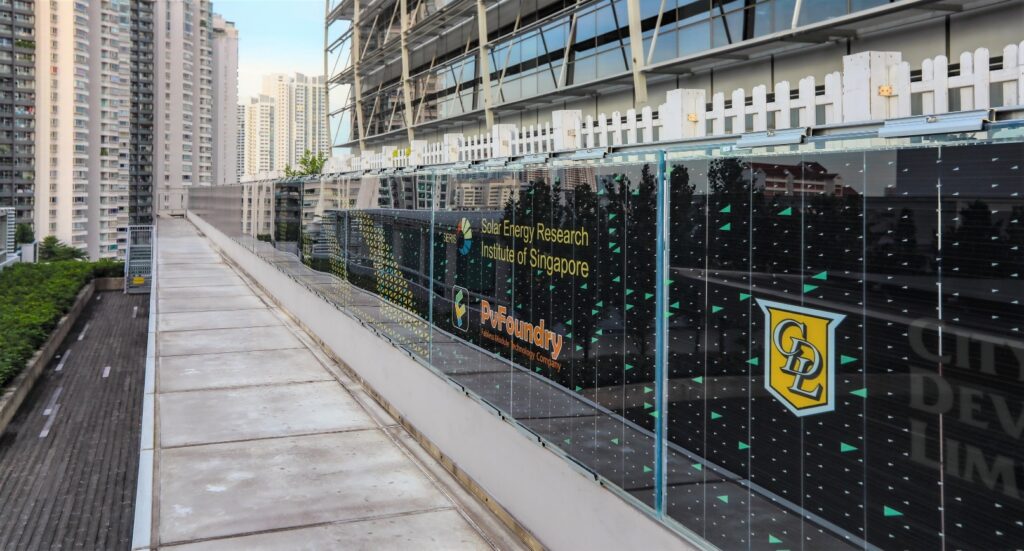
CDL also capitalises on the power of cross-sector partnerships to develop low-carbon technologies. The company has partnered with the Solar Energy Research Institute of Singapore to pilot Building-Integrated Photovoltaics (BIPV) modules and panels at various developments. The pilot on Bifacial BIPV panels with prints at CDL’s Sustainability Academy aims to optimise aesthetic value whilst generating power.

CDL and SERIS piloted a new generation of PV art wall (bifacial BIPV panels) at the Singapore Sustainability Academy at City Square Mall in 2020. This serves as a testbed for more efficient PV Installations
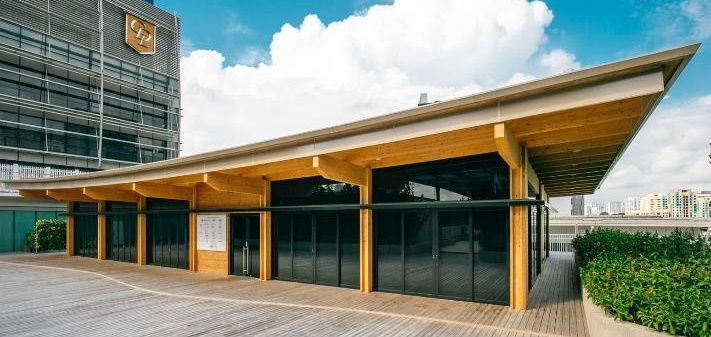
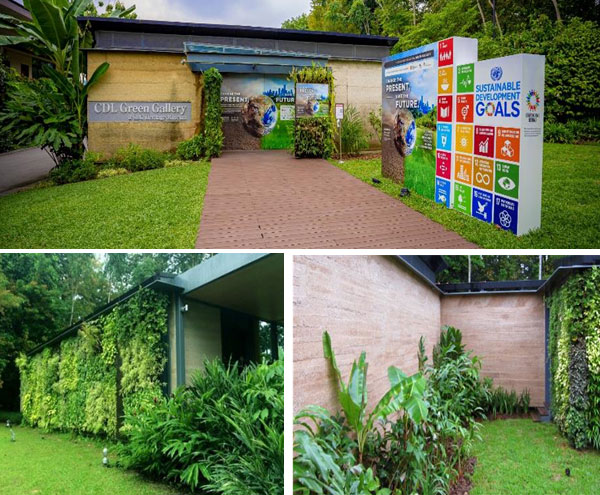
In order to achieve a net zero world, zero energy buildings are the way forward. To date, CDL has built two net zero facilities using eco-friendly technologies—the Singapore Sustainability Academy (SSA) and the CDL Green Gallery at the Singapore Botanic Gardens. The SSA, a BCA Green Mark Platinum-certified building, is the first in Singapore to have its construction materials, Cross Laminated Timber and Glued Laminated Timber, verified by the Nature’s BarcodeTM system as coming from responsible sources.

The SSA is the first ground-up initiative and zero-energy facility in Singapore dedicated to capacity building and thought leadership for climate action. Since its opening in 2017, it has tapped on 3,200 sq ft of solar panels on its rooftop as its energy source. The entire facility is built with over 80% of structural materials that come from sustainable sources.
In February 2021, CDL became the first real estate conglomerate in Southeast Asia to sign on to the World Green Building Council’s (WorldGBC) Net Zero Carbon Buildings Commitment. At COP26, CDL was one of 44 pioneering companies to expand its commitment towards a net-zero whole life carbon-built environment. Through this commitment, CDL pledged net zero operational carbon by 2030 for its new and existing wholly-owned assets and developments under its direct operational and management control. This also entails a reduction in embodied carbon and compensating residual upfront emissions via offsetting for new developments by 2030 and for all buildings to be net zero carbon by 2050.
To move towards a low carbon economy, CDL has aligned itself with even more ambitious carbon emissions reduction targets that have been successfully assessed and validated by Science Based Targets Initiative (SBTi) in 2021, in line with a 1.5°C warmer scenario. CDL was the first Singapore real estate company to validate its targets by SBTi for a 2°C warmer scenario in 2018.

The CDL Green Gallery is built with several eco-friendly technologies, including two innovative features – the biomaterial known as Hempcrete (largely made from the hemp plant) and a prefabricated modular system.
Investment: Building Leverage for the Future via Sustainable Finance

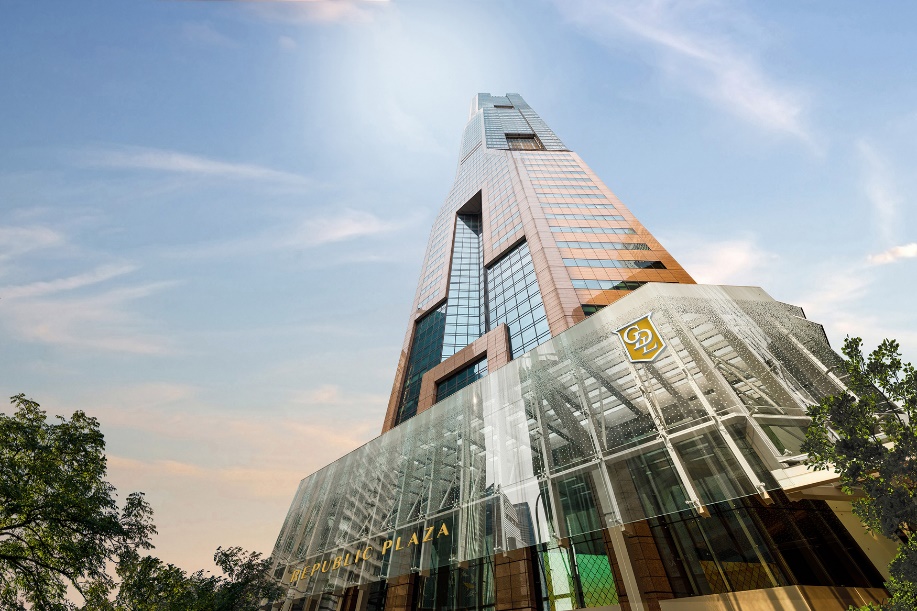
CDL’s Republic Plaza Green Bond was the first green bond issued by a Singapore company in April 2017.
CDL has secured more than $3 billion worth of sustainable finance, in the form of various green loans, a green bond, and a sustainability-linked loan, to help accelerate its green building action. It takes pride in issuing the first green bond by a Singapore company in 2017, which has helped to tap into alternative financing streams. In September 2021, CDL secured a discount for the SDG Innovation Loan provided by DBS Bank Ltd, for its successful R&D and pilot of digiHUB. This enabled CDL to be the first Singapore entity to achieve a discount on a sustainability-linked loan through the adoption of an innovative project that supports the SDGs on a large-scale basis.

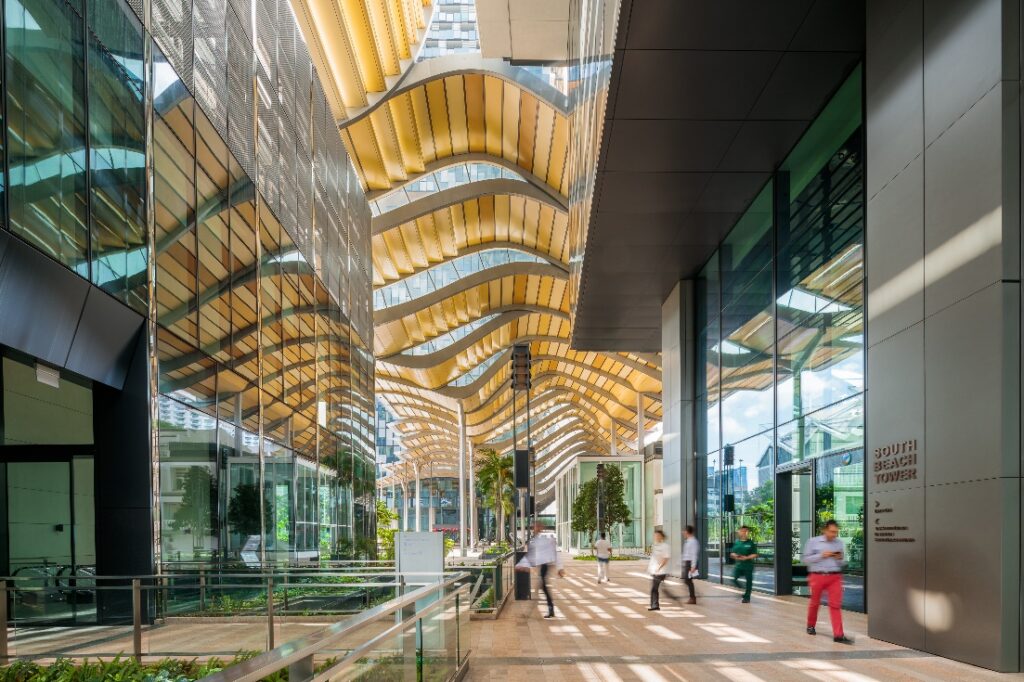
At CDL’s mixed-use development South Beach, PV panels have been installed at the tower roof and louver modules, covering a total area of approximately 1,800 m2.
Impact: Sustainable Buildings, Sustainable Communities
What gets measured gets managed—CDL’s longstanding experience in ESG disclosure and sustainability has helped it identify gaps and improve its ESG performance. Its robust ESG integration and disclosures are widely recognised by 13 global ratings, rankings and indexes, including double ‘A’s in the 2021 CDP Global A List for corporate climate action and water security.
CDL is honoured to have achieved its best performance in the Corporate Knights’ 2022 Global 100 Most Sustainable Corporations in the World, jumping from 40第 place in 2021 to 5第 position this year. In addition, it has maintained its ranking as the world’s top real estate management and development company and Singapore’s top sustainable company for the fourth consecutive year, and has been the first and only Singapore company to be included in the renowned index for 13 consecutive years.
The race to zero requires conviction and engagement with all stakeholders. After two decades of integrating ESG into our business, we have captured growth opportunities while mitigating ESG risks, enhancing value for our investors, communities, and the planet.
[1] Home – Climate Champions (unfccc.int)
[2] COP26 signals accelerated zero carbon investment drive; severe climate risks remain – Investor Group on Climate Change (igcc.org.au)
[3] WEF_The_Global_Risks_Report_2022.pdf (weforum.org)
[4] In a world of growing risk the insurance industry has a crucial role to play | Swiss Re
[5] https://www.worldgbc.org/news-media/WorldGBC-embodied-carbon-report-published

Across the Asia Pacific, what are companies doing to achieve NET ZERO carbon emissions?
APREA’s latest issue of Knowledge Brief, The Race to Net Zero, gathers thought leaders in the region, from real estate developers and investors to assets managers and technology providers, providing insightful perspectives and best practices on how businesses and stakeholders in the real assets sector can embark on a journey to #sustainability.
What will 2022 and the next decade bring? In recent years, climate change has come to surpass corporate governance as the most pressing ESG issue commanding investors’ attention, and ESG investing truly has gone mainstream (and is attracting the regulatory attention to prove it). Yet there are new risks emerging for companies, investors and the planet in the coming decade that will test how well we have learned the lessons of the past.
本報告原刊登於 https://www.msci.com/www/research-paper/2022-esg-trends-to-watch/02900617144

Kemmu Kawai 於 2022 年 9 月加入 Longevity Partners Japan 擔任國家總監。他以東京為基地,負責監督日本、亞太地區及其他地區的所有營運和活動。他擁有超過16年的金融經驗,專門從事房地產和信貸投資。在加入 Longevity Partners 之前,他曾在 Norinchukin Bank 擔任投資組合經理,並在 Center Point Development 擔任投資經理。.
Kemmu Kawai
董事總經理
長壽夥伴