APREA 徽标

知识中心

鉴于美国和欧洲正小心翼翼地徘徊在潜在衰退的边缘,东南亚预计将成为全球经济增长的主要动力之一。高纬环球最新发布的报告探讨了在最新的经济和房地产趋势下,东南亚房地产市场的发展前景。该报告分析了中国经济重启和利率上升的影响,并就东南亚主要房地产市场的投资机会、租金和资本价值前景提出了我们的观点。.

以下是GPR/APREA指数系列的再平衡结果,这些结果将于以下日期生效: 20 March 2023 (交易开始):

  • GPR/APREA 可投资 100 指数
  • GPR/APREA 可投资 REIT 100 指数
  • GPR/APREA综合指数
  • GPR/APREA综合REIT指数(标有星号)

GPR/APREA 可投资 100 指数

包含物

澳大利亚NSR ATNational Storage REIT
新加坡LREIT SPLendlease Global Commercial REIT
泰国SIRI TBSansiri PCL
泰国SPALI TBSupalai PCL

除外条款

中国香港6158真洛地产集团有限公司流动性过低
日本3278 JTKenedix Residential Next Investment Corp流动性过低
日本3453 JTKenedix零售房地产投资信托公司流动性过低
VNMVRE VMVincom Retail JSC流动性过低

GPR/APREA 可投资 REIT 100 指数

包含物

新加坡FHT SP弗雷泽斯酒店信托
新加坡PGNREIT SPParagon REIT

除外条款

韩国034830 KSKorea Real Estate Investment & Trust Co. Ltd.流动性过低
新西兰GMT NZ古德曼财产信托流动性过低

GPR/APREA综合指数 + GPR/APREA综合REIT指数

包含物

中国BHGREIT SPBHG Retail REIT *
菲律宾RCR PMRL Commercial REIT *

除外条款

世界正处于转型期。我们正目睹经济向低碳经济转型。这一转型是对气候变化、技术创新以及人口结构变化的回应。向低碳经济转型需要各界人士的通力合作,包括投资者、监管机构和消费者。.

在贝莱德,我们认为气候风险也是一种投资风险。通过投资那些将财务上重大的物理风险和转型风险以及其他信息纳入考量的房地产项目,投资者可以构建更具韧性和价值的投资组合。这不仅支持负责任的商业实践,还能在长期内带来经风险调整后的财务收益。.

可持续房地产投资可以有效地将积极的环境和社会效益与财务目标相结合。作为投资者,决策过程的一部分是将具有实质性财务影响的环境、社会和治理 (ESG) 因素与其他信息一并纳入考量,以提高风险调整后的收益。.

难以减排行业的脱碳需要技术创新,需要部署清洁能源技术并实现重工业脱碳。政府政策和法规在低碳转型中也发挥着重要作用,有助于激励对清洁技术的投资。这是一项复杂而艰巨的任务。.

改善物业设计和运营对于减少碳足迹至关重要,因为它们可以提高资源利用效率,并支持更健康、更宜居的社区。使用可再生能源、节能设计、更优质的建筑材料和智能技术是资产所有者和管理者可以优先考虑的提升物业价值的途径。智能技术可用于监控能源使用、用水量以及建筑运营的其他方面。在房地产领域使用可再生能源是长期减少碳足迹和降低能源成本的最佳途径之一。.

除了上述策略外,资产所有者还可以致力于打造更可持续的社区。建筑设计若能与公共交通和自行车道连接,并融入绿地等便利设施,便能促进更健康的生活方式。.

总体而言,房地产在可持续发展中扮演着重要角色,通过采用可持续的做法和技术,房地产所有者可以减少对环境的影响,改善社区,创造更可持续的未来,从而使他们的资产面向未来。.

温塞尔·考夫曼

可持续投资主管
亚太替代疗法
贝莱德 ×

温塞尔·考夫曼

可持续投资主管
亚太替代疗法
贝莱德

Cushman & Wakefield’s Office Fit Out Cost Guides provide an indication of the fit out construction costs for occupiers across key cities around the world. Whether it’s a basic, collaborative, or advanced hybrid fit out requirement, these Guides compiled by our Project & Development Services team serves to assist occupiers in defining their capital planning and relocation budgets.

The Guides include a comprehensive fit out cost section covering furniture, professional fees, mechanical & electrical works, construction works, audio visual/IT and other miscellaneous costs, as well as reinstatement and retrofit costs.

Estimated costs provided in our Guides are indicative of market averages based on certain assumptions. Extra costs for specific projects may defer to those presented – we recommend engaging a Project & Development Services professional to advise on precise costings base don your unique construction requirements.


APAC Guide 2023 Highlights

Most, if not all, companies have adopted some form of hybrid working model, often in response to employee expectations of increased workplace flexibility. Similarly, sustainability targets are increasingly becoming the norm, as are more visible practices to foster and promote diversity, equity, and inclusion (DE&I). The role of technology has never been more important – both as an enabler of change and as a means of measuring the impacts of change.

Together, these factors mean that the fitting out of office space goes beyond how the space looks, to include how the space contributes to a company’s financial, social, and sustainability goals whilst also reflecting corporate brand and culture.

For 32 key gateway cities across 12 markets in APAC, the Guide covers:

  • 4 key considerations for a best-in-class office fit out: workplace strategy & change management, sustainability, procurement, and technology
  • Cost estimates of the different styles of fit out to cater to the post-pandemic workforce
  • “All-in” comprehensive fit out cost breakdowns that includes furniture, mechanical and electrical works, construction works, IT, audio visual and miscellaneous costs
  • Average costs to retrofit and reinstate office spaces

CDL的《2023年综合可持续发展报告》是其自2008年以来的第十六份可持续发展报告。这份以“聚焦积极影响”为主题的电子报告阐述了CDL在实现其在《CDL未来价值2030》可持续发展蓝图中制定的实质性ESG目标方面取得的进展。外部认证对于提升数据可信度、增强读者信心至关重要。CDL自2009年起开始对其可持续发展报告进行外部认证,并持续扩大认证范围。《2022年综合可持续发展报告》和《2023年综合可持续发展报告》的外部认证范围进一步扩大,涵盖了GRI标准、SASB标准以及TCFD和CDSB框架。.

本报告最初发表于 https://cdlsustainability.com/

本报告最初发表于 https://cdlsustainability.com/

APREA市场快讯旨在阐明行业最新动态。全球思想领袖解答重要且紧迫的问题,分享他们对当前问题对实物资产投资界意义的见解和洞察。.

本期内容中,行业专家将解答以下问题:

近期银行业危机、长期高利率环境和经济增长放缓对房地产投资信托基金(REITs)有何影响?

如果利率持续上升,对您所在市场的商业地产会有什么影响?是否存在一些投资机会?
The growth of major life sciences companies has started to normalise after a period of significant growth during the height of the pandemic. Weaker revenue growth and capital funding in the face of slowing global economies is shaping a new competitive landscape for the life sciences sector and the need for companies to rethink their real estate strategy.

This report explores the latest life sciences real estate trends and their impact on real estate strategy. It also examines the latest developments in R&D Laboratory and Office portfolios, as well as investment demand.

Key highlights are below:

  • Office Portfolios: Most life sciences firms are seeking to keep costs under control and are therefore unwilling to add to their office portfolios. Workplace transformation and efficiency are a major focus.
  • R&D Laboratory Portfolios: As of the end of 2022, there was more than 100 million sq. ft. of R&D laboratory space in Asia Pacific. Solid leasing demand is driving the emergence of new life science hubs.
  • Life Sciences Real Estate Investment: Investment demand remains upbeat, with US$18 billion of funds raised for Asia Pacific life sciences real estate in the past five years. However, a shortage of assets for sale meant just US$717 million of direct investment was recorded in 2022.

本报告最初发表于 https://www.cbre.com/insights/reports/2023-asia-pacific-life-sciences-real-estate-trends

Released in December 2022, the Hong Kong Innovation & Technology Development Blueprint maps out the overall direction and key strategies for the city’s I&T development over the next five to 10 years with the objective of making the city more competitive and diversifying its sectors. This research paper provides the first in-depth review of the strategic plan towards developing Hong Kong into a world-leading hub for I&T and how it will bring valuable opportunities to the I&T sector and the city’s future development.

本报告最初发表于 https://www.colliers.com/en-hk/research/hong-kongs-i-and-t-future-and-its-property-implications

The office sector has shifted and while asset owners need to adjust so too do flexible workspace operators, otherwise flexible workspace operators, who were once seen as disruptors to the office market, will themselves be disrupted.

Shifting occupier profiles are leading to white space opportunities. We have seen an uptick in demand for enterprise solutions and turnkey offices. We believe this presents an opportunity for a managed suite product, which is a product yet to become mainstream in many Asia Pacific markets. The question is: who is best placed to deliver this?

Meanwhile, asset owners are aiming to placemake with holistic, integrated, hospitality-led amenity stacks to elevate the occupier experience. Is this an opportunity for a new type of operator?

This is an incredibly exciting time, with occupier trends driving innovation in how the market delivers the workplace of the future. This may be the dawn of Office 2.0; at the very least, it is the dawn of Flex 2.0.

本报告最初发表于 https://www.knightfrank.com/research/report-library/the-flexible-workspace-outlook-report-2023-2023-10012.aspx

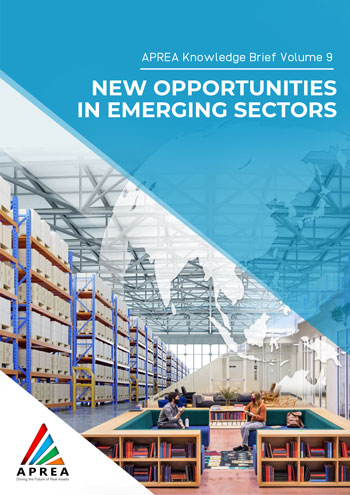
Amid the current challenging times for the global economy, the Asia Pacific region remains a bright spot. This is in part due to new and compelling opportunities for investors, especially in asset classes that go beyond the traditional sectors of residential, commercial, and retail.

This issue of Knowledge Brief explores the case for investing in niche and emerging sectors, which have been outperforming traditional asset classes. These include multifamily housing, flexible office space, senior living, healthcare and life sciences, renewables, modern industrial parks, warehousing, data centres, and more.

What are the trends and opportunities in the regional investment landscape? How has technology, as well as changing lifestyles and working practices, caused investors to rethink their strategies?

The articles in this volume discuss how opportunities abound in the real assets industry, with robust prospects for the Asia Pacific.