APREA 徽标

知识中心

Q3 2022 Investment Trends features in-depth and up to date insights on demand drivers and other key investment trends in Australia, mainland China, Hong Kong SAR, Taiwan, Japan, Korea, India, Singapore, and New Zealand.

主要趋势

  • Faster-than-expected interest rate hikes hinder acquisitions
  • Purchasing led by real estate funds and institutional buyers
  • Significant decline in logistics and hotel transactions
  • Retail deal flow picks up
  • Cross-border deals continue to rise y-o-y
  • Fund-raising remains solid
  • Investment activity is expected to weaken further

本报告最初发表于 https://www.cbre.com/insights/figures/asia-pacific-investment-trends-q3-2022

主要趋势

  • Leasing activity loses momentum
  • Occupancy remains high
  • 3PL and e-commerce drive demand
  • Pacific markets underpin rental growth
  • Investment interest stays firm
  • Mild yield expansion in selected markets

本报告最初发表于 https://www.cbre.com/insights/figures/asia-pacific-industrial-and-logistics-trends-q3-2022

主要趋势

  • Retail sales growth slows
  • Inflation and recessionary fears weigh on consumption
  • Leasing activity shows slight recovery
  • Luxury brands turn more active
  • Zero-covid impacts mainland China demand
  • Retailers set to remain cautious

本报告最初发表于 https://www.cbre.com/insights/figures/asia-pacific-retail-trends-q3-2022

主要趋势

  • Slower economic growth and inflationary pressure weigh on leasing activity
  • Mainland China see mild recovery but other markets flat or weaker
  • Finance, tech and coworking remain major demand drivers
  • Rising construction and fit-out costs cause delays to new supply
  • Flight to quality relocation still most popular strategy
  • Occupiers set to remain cost cautious as economic worries mount

本报告最初发表于 https://www.cbre.com/insights/figures/asia-pacific-office-trends-q3-2022

  • The Asia Pacific flexible office space market continued to display cautious growth in 2022, with the total volume of flexible office space in the region reaching 76 million sq. ft. as of September, an increase of 6% y-o-y on 2021 and 15% on pre-pandemic levels.
  • As of September, flexible office space accounted for about 4% of total office stock and 3% of total Grade A office stock in Asia Pacific. In the Grade A segment, India and Singapore reported the highest penetration of flexible office space, while most North Asian markets are just below 2%.
  • Tech firms and business services companies remain the top corporate users of flexible office space. Interest is also growing among financial, life science and consumer product firms.
  • Trends that will continue to shape the flexible office landscape in 2023 include:
  1. Flexible space operators offering on-demand memberships to cater to more dispersed workforces resulting from the widespread adoption of hybrid work
  2. Growing occupier demand for customised enterprise and turnkey solutions to mitigate rising fit out costs and CapEx constraints
  3. The use of asset-light strategies as flexible space operators form partnership with landlords using management contracts

本报告最初发表于 https://www.cbre.com/insights/briefs/h2-2022-asia-pacific-flexible-office-market-deliberate-growth-continues

GDI地产集团(GDI)是一家总部位于澳大利亚新南威尔士州的上市房地产投资信托基金,目前正在珀斯建造首座采用混合式大体量木结构和钢结构框架的办公楼。GDI将采用交叉层压木材和钢材相结合的方式建造WS2,这是一座11层、9500平方米的办公楼,旨在打造一流且注重可持续发展的资产。.

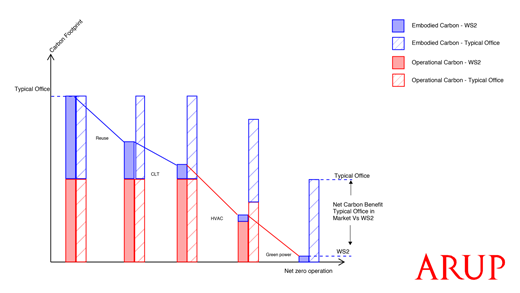
GDI公司进行了广泛的研究,以了解开发其所谓的珀斯最环保的高端办公楼的环境和经济影响。WS2办公楼预计将于2022年底竣工,届时将获得NABERS能源评级五星级和Greenstar绿色建筑评级五星级,与类似的混凝土/钢结构建筑相比,其整个生命周期内的碳排放量将减少约501吨/立方吨,施工阶段的隐含碳排放量将减少801吨/立方吨。这些减排将通过碳抵消、建筑内部的可再生能源系统以及施工阶段显著降低的隐含碳排放量来实现。最终目标是实现净零排放运营,降低范围一和范围二的碳排放,同时获得更好的经济效益,因为根据该公司在11月10日的演示文稿,木结构建筑“在总净可出租面积基础上建造速度更快、成本更低”。.


什么是大体量木结构?

大块木材,有时也称为交叉层压木材,由多层干燥木材以交替方向堆叠,并用结构胶粘合在一起,压制而成。这些板材经过专门设计,以满足承重墙、楼板和屋架的高强度要求,并且通常在现场生产。由此制成的大块木材板材比混凝土和钢材轻得多(平均重量仅为钢梁的五分之一),同时保持了更高的强度重量比。.

目前各国对大型木结构建筑项目的建筑规范不尽相同,但美国和加拿大最近的立法已允许建造高达18层的大型木结构建筑。其他市场,例如欧洲部分地区和澳大利亚,对大型木结构建筑的要求更为先进,悉尼一座新建的40层大型木结构建筑正在设计中,计划于2023年开工建设。.

大尺寸木结构建筑及其环境优势

环境影响:

  • 与混凝土或钢铁废料不同,大块木材被丢弃时会以自然的速度分解。. 
  • 一立方米的实木大约可以固存一吨二氧化碳。. 
  • 在对中高层建筑中的大尺寸木材与钢筋混凝土进行全生命周期分析后发现,大尺寸木材可减少 26% 的全球变暖潜能。. 
  • 大规模木结构建筑作为钢结构建筑的替代方案,每立方米木制品可减少1.9公吨二氧化碳排放。

抗拉强度:木材比钢材和混凝土更能承受自身的重量。.

电气和耐热性能:干燥至标准含水率时具有天然的导电性。强度和尺寸受热影响不大,确保成品建筑的稳定性。.

吸音:木材的声学特性使其成为减少居住或办公空间回声的理想选择。木材能够吸收声音,而不是反射或放大声音。.

WS2和大型木结构建筑的经济可行性

GDI开发主管大卫·奥肯登解释说,由于工期缩短且材料相对较轻,大体量木结构建筑同样具有显著的经济效益。具体而言,大体量木材的抗拉强度使得WS2大楼的占地面积比之前预想的要大:

“最初我们开始考虑传统的混凝土结构时,它只能是两层楼,但当我们开始探索木结构时,我们可以建造更多,并将资金重新投入到该区域进行升级改造。”

在以大宗商品开采闻名的珀斯,对可持续资产的需求尤为旺盛,当地企业也常常寻求改善其环境、社会和治理(ESG)影响的方法。GDI已收到来自潜在整栋楼、多层楼和单层楼租户的强烈租赁意向,WS2项目广受好评,备受青睐。WS2大楼全面竣工后,将成为GDI旗下旗舰办公空间,并为GDI在西澳大利亚州持续开展大规模木结构开发奠定基础。正如上文所述,GDI在近期董事总经理的报告中也提到,他们已确定了其他计划采用木结构的项目,并正在探索1 Mill Street和惠灵顿停车场的重建机会。GDI的报告指出,相关开发审批申请已提交或正在审批中。.

投资大型木结构项目的益处

B&I Capital是一家资产管理公司,在苏黎世、新加坡和奥斯汀设有办事处,专注于上市房地产投资。我们致力于将环境、社会和治理(ESG)标准融入到投资流程和公司运营的各个环节。我们相信,像WS2这样的大型木结构建筑项目与我们通过尽可能降低范围一和范围二排放来最大限度减少环境足迹的目标完全契合。此外,鉴于木结构建筑能够显著增加净可租赁面积并缩短工期,因此能够带来更高的经济回报。由于木结构建筑施工大幅减少了碳排放,WS2项目无需购买绿色电力或碳信用额即可实现净零排放。我们投资GDI是出于对其建设环保项目理念的支持,以及对其作为优质房地产投资项目的信心。正是通过投资像GDI这样的公司,我们积极参与构建可持续的未来。.

Almost three years after the onset of the global pandemic, the retail industry has been through one the biggest stress tests imaginable, but best-in-class real estate has remained robust – and even emerged stronger in some markets.

Cushman & Wakefield’s flagship Main Streets Across the World report tracks the top retail districts across 92 cities and ranks the most expensive by prime rental value. An annual report until 2019, this year’s report is the first since then, allowing insight into comparative performance pre- and post-pandemic.


Rent Growth Highlights

  • Rents across global prime retail destinations declined by 13% on average during the depth of the pandemic but have rebounded to just 6% below pre-pandemic levels.
  • The Americas, thanks largely the to the U.S., was the most resilient region – on average rents now sit at a 15% premium to pre-pandemic levels.
  • In Asia Pacific rents fell on average by 17%, impacted by international border closures, which curbed tourism in prime locations.

Global Rankings

  • New York’s Upper Fifth Avenue moves up one spot to number one, now ranks as the most expensive retail destination in the world.
  • Hong Kong has slipped to second place, with Tsim Sha Tsui overtaking Causeway Bay as the most expensive precinct in the city-state.
  • Via Montenapoleone in Milan has jumped two positions to achieve third place, followed by London’s New Bond Street and The Avenues des Champs Elysees in Paris rounding out the top five.

This quarter, the Knight Frank Data Centre report focuses on the growth markets of Asia Pacific. Market analysis includes Osaka, Melbourne, Jakarta, Manila, Hanoi, Taipei, and Indian cities Hyderabad, New Delhi and Chennai.

The growth trajectory of data centre supply noted in the principal global data centre markets in previous quarters is now being mirrored in secondary cities across the region. Underpinned by strong demand fundamentals and a trend towards greater localisation of data centre facilities, total supply (live, under construction, and committed capacity) in the reported APAC markets has grown from just under 700MW five years ago to over 3,000MW today. For the first three quarters of 2022 alone, around 600MW of new capacity has been added.


Melbourne, Jakarta and Osaka now each have over half a gigawatt of aggregate IT Supply. At 593MW of registered IT supply, Melbourne is seeing renewed interest from local and regional operators such as NextDC, AirTrunk, Vantage and Stack Infrastructure, which will add close to 450MW to existing live supply. Microsoft is also known to be planning a facility here. Jakarta has seen significant announcements and planned capacity, several times the existing supply, from both hyperscale cloud service providers like Amazon and Microsoft, as well as a variety of local and international operators. Osaka continues to develop as an alternative data centre market in Japan complementing the more established Tokyo region.

The major cities of Hyderabad, New Delhi and Chennai are also registering rapid growth, with between 300MW to 400MW of IT capacity each. About two-thirds of this supply was added in the past couple of years, with around 50% of total supply planned or committed capacity. The increased investment in the data centre sector in recent years is party driven by government policy, including easier access to credit and other incentives to boost data centre investment. Active players in the market include local firms such as CtrlS, Sify Technologies, Nxtra by Airtel and Web Werks, joint ventures such as AdaniConnex and BAM Digital Realty, as well as cloud service providers.

In Southeast Asia, Taipei, Manila and Hanoi continue to see growing interest from hyperscale CSPs and data centre investors. AWS announced local zones in both Manila and Hanoi this year and is in the process of rolling them out, while the global firm also launched its local zone in Taipei in October 2022. Current key players in these markets mainly comprise the local telcos, with a handful of regional joint ventures such as STT-Globe in the Philippines and NTT-VNPT in Vietnam.

Overall, the expansion of data centre activity into the growth markets across the APAC region remain on a strong footing, reflecting the continued resilience of demand across each geography.

本报告最初发表于 https://app.dcbyte.com/knight-frank-data-centres-report/Q3-2022/

气候友好型活动旨在通过从大气中消除更多的二氧化碳 (CO2) 和/或温室气体 (GHG),不仅实现净零排放目标,而且超越这一目标。简而言之,就是减少的温室气体排放量要超过自身行为产生的排放量,从而创造环境效益。.

制定气候友好型战略的第一步是应用碳核算框架。例如,如果一家建筑产品制造商想要开发一款气候中和或气候友好的产品,他们必须确定该产品的总碳足迹。碳足迹涵盖所有方面——从采购原材料所需的能源,到产品生产、供应、使用和处置过程中的能源消耗,再到与产品原材料采购、生产、使用和处置相关的排放。.

一旦计算出总碳足迹,以及需要抵消多少才能实现碳中和,那么就可以添加一个额外的测量数字,例如额外的 10%,来估算需要做些什么才能实现气候正效益。.

企业实现气候积极性的具体方式可能有所不同。但通常情况下,它们会通过多种方式来满足相关要求,包括减少碳排放、转向可再生能源、本地化生产、投资碳抵消以及购买碳信用额度。.


改造您的房地产

建筑物可以通过多种方式实现气候积极效益,简而言之,实现气候积极效益的步骤是在实现净零排放的基础上更进一步,即采取一切必要措施,使建筑物吸收的温室气体(GHG)比其产生的温室气体更多。建筑物的策略应包含以下步骤的组合:

步骤 1
选择:最佳建筑位置、设计、能源建模、环保材料、可再生能源和智能能源管理系统

步骤 2
最大化:结构效率、隔热和温室气体减排系统

步骤 3
最大限度减少:材料和运营浪费以及用水量

第四步
维护:硬件和软件

第五步
再利用:在当前用途过时后

In this article, we explore an emerging sub-set of infrastructure which is garnering increasing amounts of interest from global private equity and pension funds – Educational Infrastructure or ‘EduInfra’. EduInfra refers to the infrastructure, building and land used to deliver social services like education.

EduInfra is attractive to international annuity investors looking for stabilized yield plays. The sector has an edge over other similar asset classes due to its non-GDP linked and rather recession proof character with significant potential for capital appreciation. It offers a promising 10 – 11% entry cap rate with rental escalations in the region of 3 – 5%. While the market boasts of significant depth, potential has not been unleashed as operators are only slowly moving towards asset light models.  EduInfra’s classification as infrastructure allows for tax optimal exit through InvITs which can also serve as a growth platform attracting institutional investors.

This was originally published in https://resolutpartners.com/2022/11/15/eduinfra-emergence-of-a-new-asset-class/