

Nature-based solutions (NbS) are actions that work with and enhance natural systems to address climate, social, and economic challenges. They can include on-site measures such as green roofs, rain gardens, and permeable pavements, as well as larger-scale interventions like wetland restoration, mangrove rehabilitation, and urban forests. NbS can deliver multiple benefits like improving resilience against the effects of climate change, enhancing biodiversity, and providing people with green space, delivering positive impacts to well-being. In Asia Pacific, where rapid urbanisation and climate risk converge, NbS are vital for future-proofing real assets whilst delivering positive environmental and social outcomes.
The real assets sector is deeply dependent on stable, functioning natural systems for clean water, and climate regulation. As the effects of climate change increase in frequency and intensity, this dependency translates into material risks: flooding, landslides, drought, heat stress, and ecosystem degradation that directly degrade asset performance and value.
| NbS are increasingly recognised across ASEAN as a cost-effective response to climate change, offering both mitigation and adaptation benefits. |
At the site level, urban NbS can provide measurable benefits. Green roofs and living walls lower energy demand by insulating buildings and reducing the urban heat island effect. Rain gardens and bioswales improve stormwater management, cutting flood risk and lowering maintenance costs. For example, constructed wetlands and rooftop farms in Bangkok have proven to reduce runoff by up to 85% while lowering surface temperatures by several degrees. Such measures not only reduce operational costs but also help properties meet tightening building codes and ESG requirements, unlocking access to green finance.
Beyond individual assets, landscape-scale NbS are crucial for long-term resilience, and there are some prime examples already across the region. Restoring mangroves along coastlines in Vietnam and the Philippines provides natural flood protection while supporting local livelihoods. Similarly, wetland restoration around Manila Bay delivers flood protection valued at more than 30 times the annual investment cost. These ecosystem-level interventions safeguard entire catchments and urban regions, indirectly protecting the value and viability of real assets across the APAC region.
Importantly, evidence from within the real asset market shows us that NbS integration creates tangible financial upside. Buildings with strong green credentials and nature access consistently command rental and sales premiums of 5–10%, higher occupancy rates, and better resilience against insurance cost increases. In a region where climate risk threatens to turn non-resilient properties into stranded assets, NbS are emerging as both a defensive strategy and a driver of competitive advantage.
To begin integrating NbS, asset owners should take a phased, practical approach:
- Build the business case – Assess site-specific climate and nature-related risks and quantify opportunities for operational savings, asset value enhancement, and financing access.
- Engage Cross-Functional Teams – Maximise feasibility by ensuring buy-in from across the organisation—including finance, engineering, and operations—from the very beginning of the business case.
- Start small and with curiosity – Pilot on-site solutions such as modular rain gardens, vertical greening, or rooftop vegetation. These low-cost interventions provide proof of concept and momentum for scaling.
- Collaborate for impact – Partner with governments, NGOs, and academic institutions to co-design projects, access technical expertise, and align with regulatory incentives.
- Design for multiple benefits – Prioritise multifunctional NbS that deliver cooling, flood management, biodiversity, and community value within limited urban space.
- Measure Success – To capture the full value of NbS projects, be prepared to measure success beyond traditional metrics, by utilising both qualitative and quantitative tools.
Nature-based solutions are no longer optional enhancements; they are central to the resilience, performance, and long-term profitability of real assets in Asia Pacific. From small on-site designs to landscape-level ecological restoration, NbS offer a cost-effective path to align real estate portfolios with climate imperatives, regulatory shifts, and investor expectations. Real asset owners who act now will not only protect against mounting climate risks but also position themselves at the forefront of a nature-positive, future-ready economy.
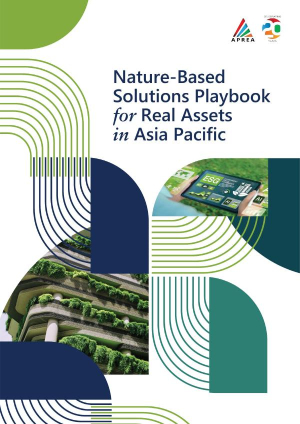
For more information, check out APREA’s “Nature-Based Solutions Playbook for Real Assets in Asia Pacific” a comprehensive guide detailing the business case and strategic frameworks for embedding NbS to unlock long-term value and enhance resilience for the real assets industry.
Authors of the article: