India Real Estate: What changed due to Covid-19?
1. Raw material supply chains disrupted
• Construction requires more than 200 items
• Dependence on China for elevators, steel, etc.
• Limited availability and possible hike in raw material prices
Connect with us on
Connect with us on


India Real Estate: What changed due to Covid-19?
1. Raw material supply chains disrupted
• Construction requires more than 200 items
• Dependence on China for elevators, steel, etc.
• Limited availability and possible hike in raw material prices
We are presently living in unprecedented times and Covid-19 has – in more ways than one – altered the way we live, think, work, or even socialize with people around us. However, there lies an opportunity in every crisis and Covid-19 looks no different. All industries including Indian real estate are now diligently working to innovate and strategize their business. Among the key noticeable trends already, Indian residential sector is all set to embark on a different growth trajectory with ‘home ownership’ gaining significant preference among the new-age millennials, probably because it renders high level of security.
Investment in China’s commercial market was already proving challenging towards the end of 2019 as fundamentals that had supported demand were softening while new supply was pushing up vacancy rates in many markets. This, combined with low yields, made underwriting deals problematic unless there was significant add-value or specific area support, such as new infrastructure or master planning.
Rent growth was solid in both the C5W and the 23W, with the latter leading the way over the quarter and year. That said, given current market conditions, growth looks likely to pause until the impact of COVID-19 becomes clearer.
• Rent growth in the Tokyo 23 wards (23W) was solid during Q1/2020. Rents now stand at JPY4,155 per sq m – an increase of 2.7% quarter-on-quarter (QoQ) and 5.8% year-on-year (YoY).
• A verage mid-market rents in the central fi ve wards (C5W) continued their ascent towards JPY5,000. They are now at JPY4,928 per sq m after growth of 1.8% QoQ and 5.4% YoY.
• T he C5W saw its premium over the 23W average contract to around 19%. Elsewhere, discounts widened in most other submarkets.
As we move further into the Covid-19 crisis and transaction activity continues to dwindle, investors are becoming increasingly concerned about market liquidity. Given the long-term nature of commercial real estate investment one should expect a certain amount of cyclicality during the period of ownership. However, at times of extreme stress the need for liquidity becomes paramount in order to preserve cash and lock in performance.
With 2019 being an average year in terms of new office supply, amid the intense competition for space, Grade A office vacancy in the C5W was close to nil. Meanwhile, underpinned by solid corporate profit growth – particularly in the technology sector – rents continued their upswing. Specifically, by year end, average Grade A rents in the C5W had reached JPY37,373 per tsubo per month – an increase of 8.0% year-on-year (YoY). Indeed, fundamentals appeared solid heading into the new decade, only for the COVID-19 outbreak to scupper the sector’s previously optimistic prospects.
Against the backdrop of a slowing domestic economy, coupled with global economic uncertainties and the protracted China–US trade war, the hotel industry in the Greater China region demonstrated weak performance in 2019. Among all major cities, including Beijing, Shanghai, Shenzhen, and Hong Kong, the Average Daily Rate (ADR) of five-star hotels shrank, and the occupancy rate dropped in Shanghai, Shenzhen and Hong Kong. Macau still managed a slight increase in ADR, but the occupancy rate fell. The weak growth trajectory of the hotel industry was further dragged down by the COVID-19 outbreak and this is expected to continue in the first half of 2020.
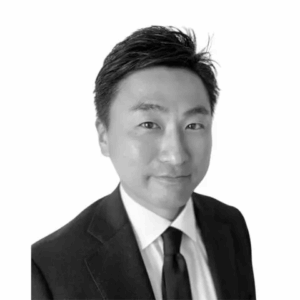
Kemmu Kawai joined Longevity Partners Japan in September 2022 as the Country Director. Based in Tokyo, he oversees all operations and activities in Japan, the Asia-Pacific region and beyond. He brings him more than 16 years of experience in finance where he specialised in real estate and credit investments. Before joining Longevity Partners, he served as a Portfolio Manager at Norinchukin Bank and as Investment Manager at Center Point Development.
Kemmu Kawai
Managing Director
Longevity Partners