Knight Frank – Asia-Pacific Warehouse Review H2 2021
Take-up in the region’s warehouse markets remained robust in the second half of 2021, lifted by resurgent trade flows from the recovery in global demand. As a result, rents for logistics warehouses across Asia-Pacific rose by a marginal 0.5% year-on-year in the same period. Despite close to 9 million sqm of new supply expected to be delivered in the region in 2022, vacancies are likely to remain tight on strong demand and active pre-commitments.
APREA ADVOCACY BULLETIN: Vibrant Voice of Real Assets Q4 2021
Read on for the full updates from APREA’s Q4 2021 Advocacy Bulletin, which includes the latest industry and regulatory developments from Hong Kong, China, India, and Singapore.
Cushman & Wakefield’s Singapore Office Market Outlook 2022 Report
Following a strong recovery in office demand, reduced vacancies and growth in CBD Grade A office rents in 2021, the Singapore office market is expected to further pick up pace in 2022.
According to Cushman & Wakefield’s ‘Singapore Office Market Outlook 2022’ report, the projected economic growth of 3.6% in Singapore coupled with the positive economic outlook globally and regionally bode well for another robust office market this year, barring any unforeseen circumstances.
Environmental, Social and Governance (ESG) integration is no longer a choice today. In the global Race to Zero[1], led by UNFCCC, over 5,200 businesses, 1,040 cities and 440 investors have stepped up their ambition and joined the global alliance to catalyse climate change. Following COP26, over 90% of global GDP has committed to achieving net zero by or near mid-century.[2] According to the 17th Edition of the World Economic Forum Global Risks Report, environmental risks were perceived to be the five most critical long-term threats over the next 10 years.[3] Climate risks are investment and business risks – the damage caused by climate change is projected to result in an increase of up to 41% of global property premiums until 2040.[4] With the building and construction sector accounting for about 40% of global carbon emissions[5], the real estate sector is in a prime position to advance sustainable development.
Integration: Strong Fundamentals for Business and Climate Resilience
City Developments Limited (CDL)’s ESG strategy stems from its corporate ethos, “Conserving as we Construct” established in 1995. Its value creation business model is anchored on four key pillars—Integration, Innovation, Investment, and Impact; guiding CDL to achieve three key deliverables: “Decarbonisation”, “Digitalisation & Innovation” and “Disclosure and Communication”. The CDL Future Value 2030 sustainability blueprint, implemented in 2017, maps out clear strategic goals and ESG targets across CDL’s business strategies and operations.
CDL’s sustainability portfolio reports directly to the Board Sustainability Committee with ESG factors effectively integrated into its business, operations and growth strategy. In 2018, the CDL Group introduced its G.E.T. strategy—focusing on Growth while adopting an ESG lens, Enhancement of assets to drive operational efficiency and Transformation to deliver long-term and sustained value.
Innovation: Scaling up Sustainable Technologies for a Green Revolution
Recognising that innovation is a key accelerator of climate solutions, CDL set up a Green Building & Technology Application team in 2020. The team collaborates with the organisation’s Enterprise Innovation Committee, leveraging cutting-edge technology to reduce CDL’s carbon footprint in the way it designs, builds, and manages its assets.
To advance circularity solutions, CDL is studying the feasibility of advanced low-carbon construction methods and materials to reduce embodied carbon. To do this, CDL has ramped up on buildable designs moving towards less labour-intensive processes, and focuses on Integrated Digital Delivery and Design for manufacturing and Assembly (DfMA) technologies. Through this, CDL can reduce reliance on on-site workers, enhance workplace safety and health, and drive productivity improvements in construction and facility management.
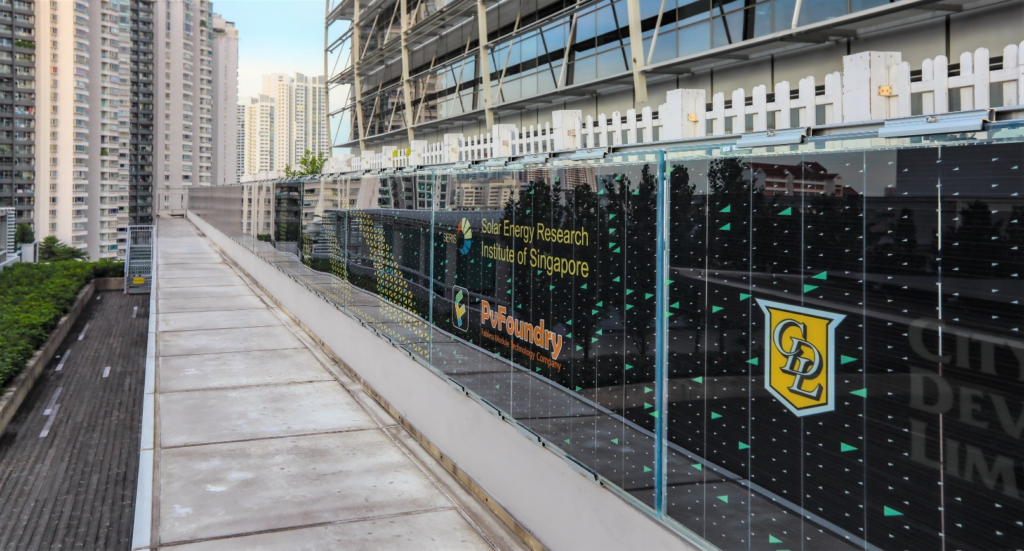
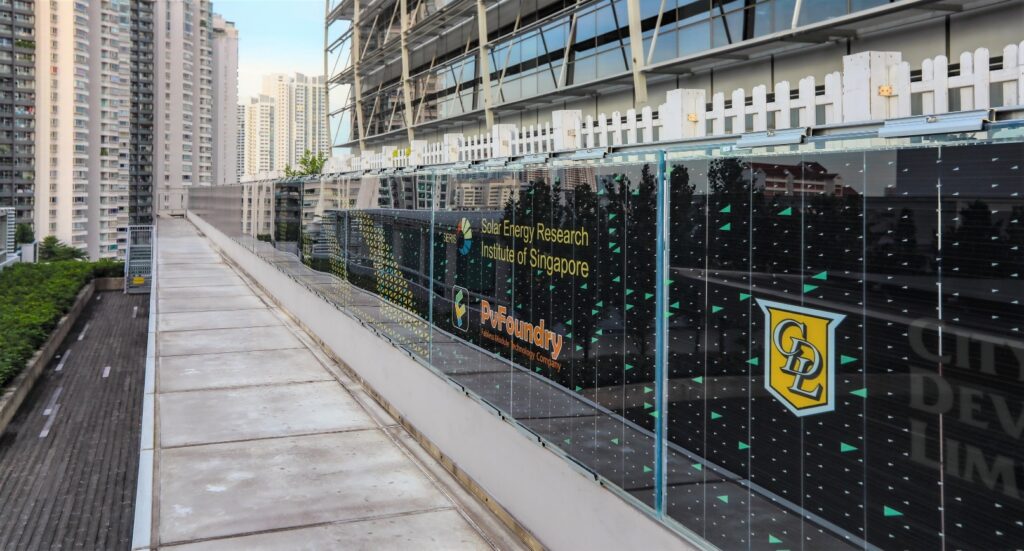
CDL also capitalises on the power of cross-sector partnerships to develop low-carbon technologies. The company has partnered with the Solar Energy Research Institute of Singapore to pilot Building-Integrated Photovoltaics (BIPV) modules and panels at various developments. The pilot on Bifacial BIPV panels with prints at CDL’s Sustainability Academy aims to optimise aesthetic value whilst generating power.
CDL and SERIS piloted a new generation of PV art wall (bifacial BIPV panels) at the Singapore Sustainability Academy at City Square Mall in 2020. This serves as a testbed for more efficient PV Installations
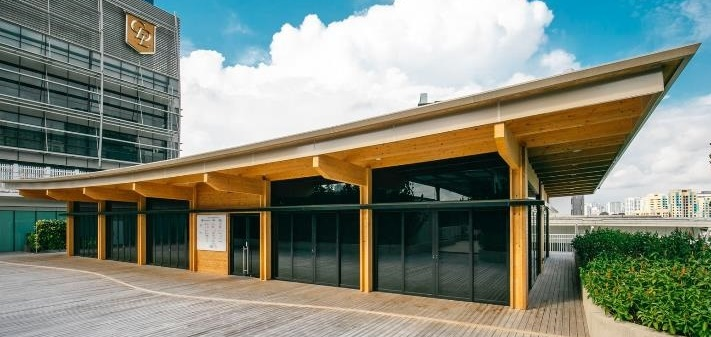
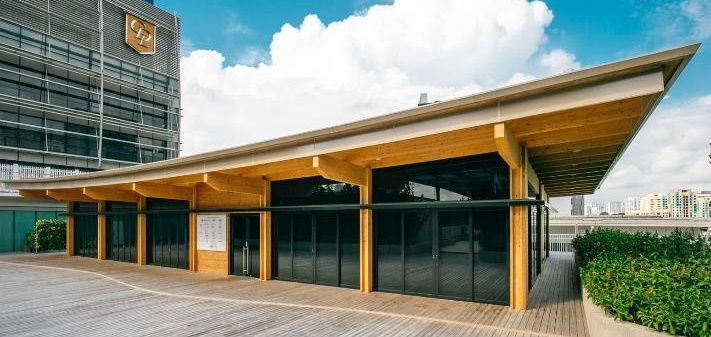
In order to achieve a net zero world, zero energy buildings are the way forward. To date, CDL has built two net zero facilities using eco-friendly technologies—the Singapore Sustainability Academy (SSA) and the CDL Green Gallery at the Singapore Botanic Gardens. The SSA, a BCA Green Mark Platinum-certified building, is the first in Singapore to have its construction materials, Cross Laminated Timber and Glued Laminated Timber, verified by the Nature’s BarcodeTM system as coming from responsible sources.
The SSA is the first ground-up initiative and zero-energy facility in Singapore dedicated to capacity building and thought leadership for climate action. Since its opening in 2017, it has tapped on 3,200 sq ft of solar panels on its rooftop as its energy source. The entire facility is built with over 80% of structural materials that come from sustainable sources.
In February 2021, CDL became the first real estate conglomerate in Southeast Asia to sign on to the World Green Building Council’s (WorldGBC) Net Zero Carbon Buildings Commitment. At COP26, CDL was one of 44 pioneering companies to expand its commitment towards a net-zero whole life carbon-built environment. Through this commitment, CDL pledged net zero operational carbon by 2030 for its new and existing wholly-owned assets and developments under its direct operational and management control. This also entails a reduction in embodied carbon and compensating residual upfront emissions via offsetting for new developments by 2030 and for all buildings to be net zero carbon by 2050.
To move towards a low carbon economy, CDL has aligned itself with even more ambitious carbon emissions reduction targets that have been successfully assessed and validated by Science Based Targets Initiative (SBTi) in 2021, in line with a 1.5°C warmer scenario. CDL was the first Singapore real estate company to validate its targets by SBTi for a 2°C warmer scenario in 2018.
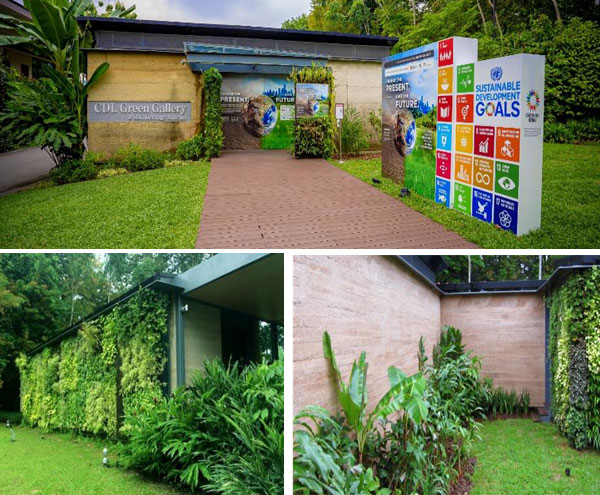
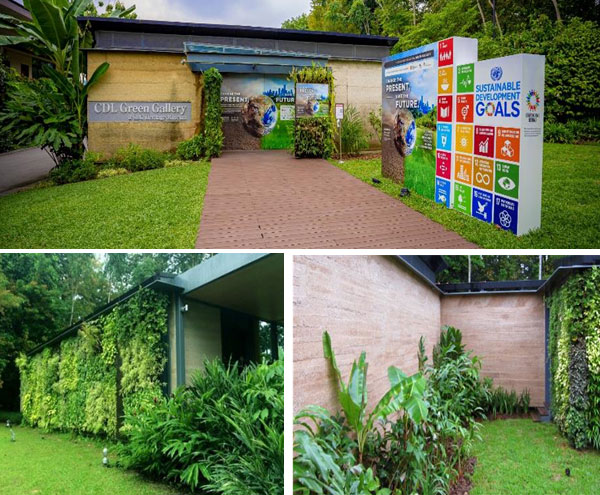
The CDL Green Gallery is built with several eco-friendly technologies, including two innovative features – the biomaterial known as Hempcrete (largely made from the hemp plant) and a prefabricated modular system.
Investment: Building Leverage for the Future via Sustainable Finance
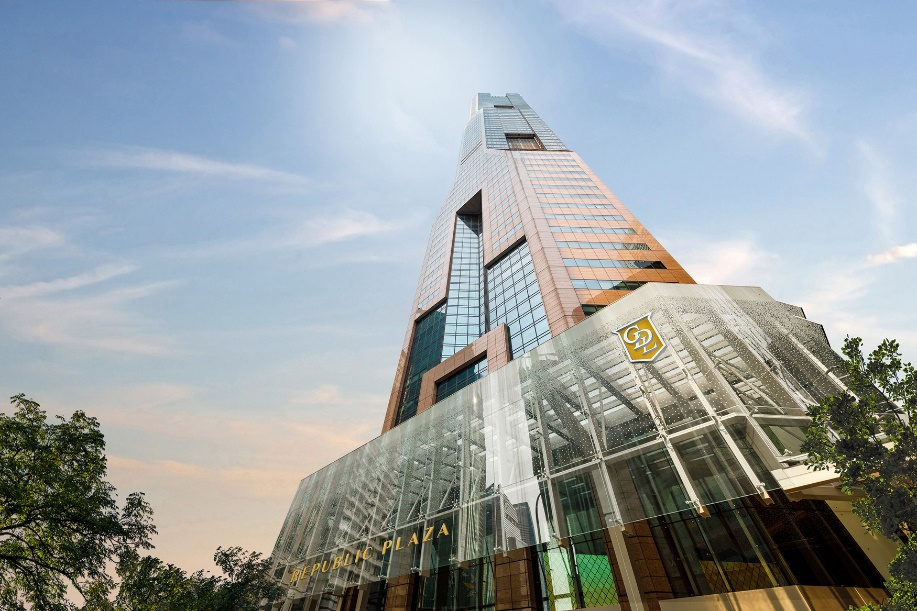
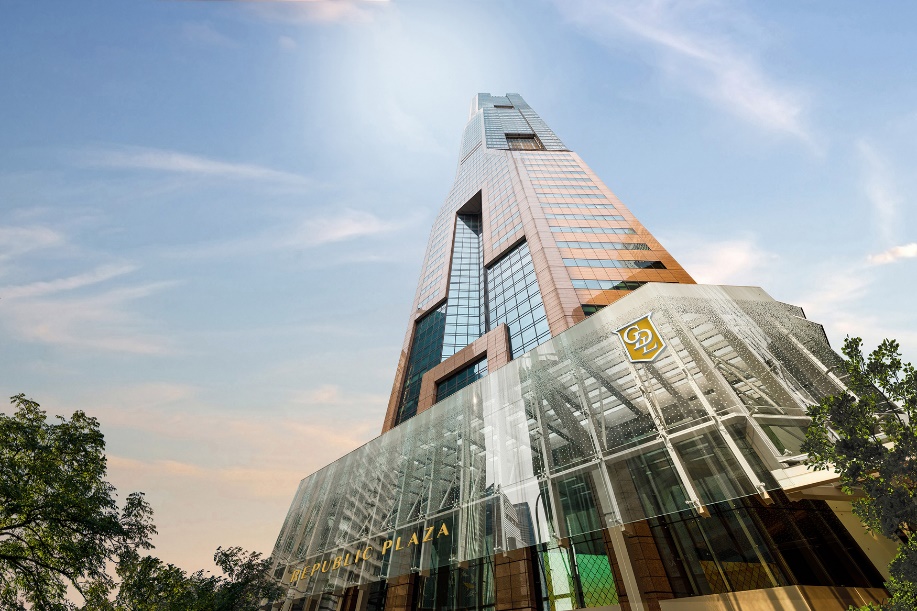
CDL’s Republic Plaza Green Bond was the first green bond issued by a Singapore company in April 2017.
CDL has secured more than $3 billion worth of sustainable finance, in the form of various green loans, a green bond, and a sustainability-linked loan, to help accelerate its green building action. It takes pride in issuing the first green bond by a Singapore company in 2017, which has helped to tap into alternative financing streams. In September 2021, CDL secured a discount for the SDG Innovation Loan provided by DBS Bank Ltd, for its successful R&D and pilot of digiHUB. This enabled CDL to be the first Singapore entity to achieve a discount on a sustainability-linked loan through the adoption of an innovative project that supports the SDGs on a large-scale basis.
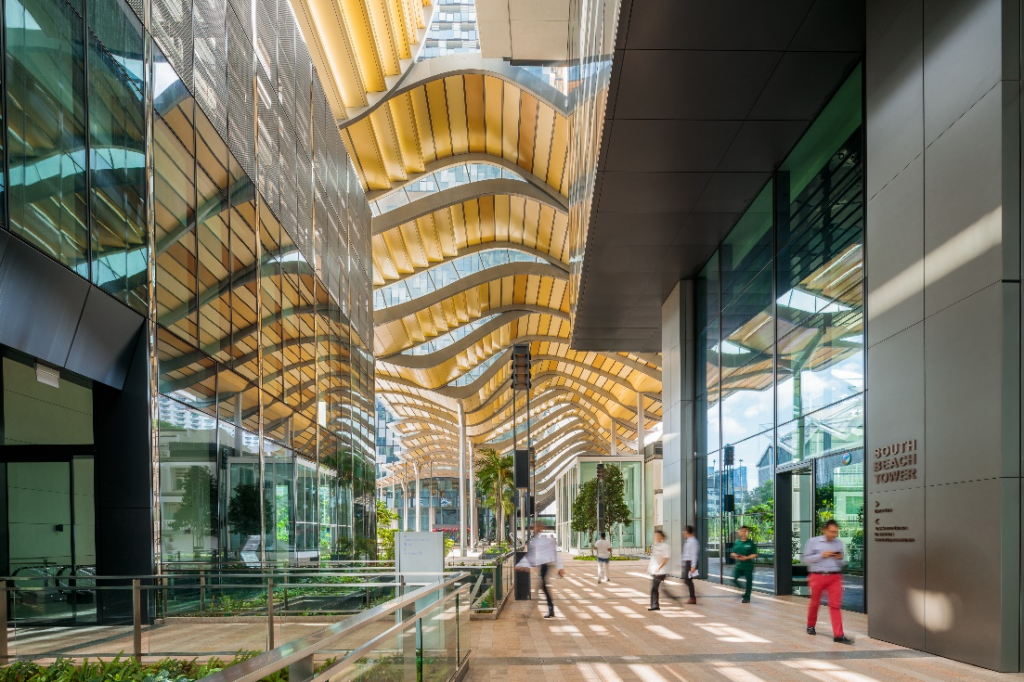
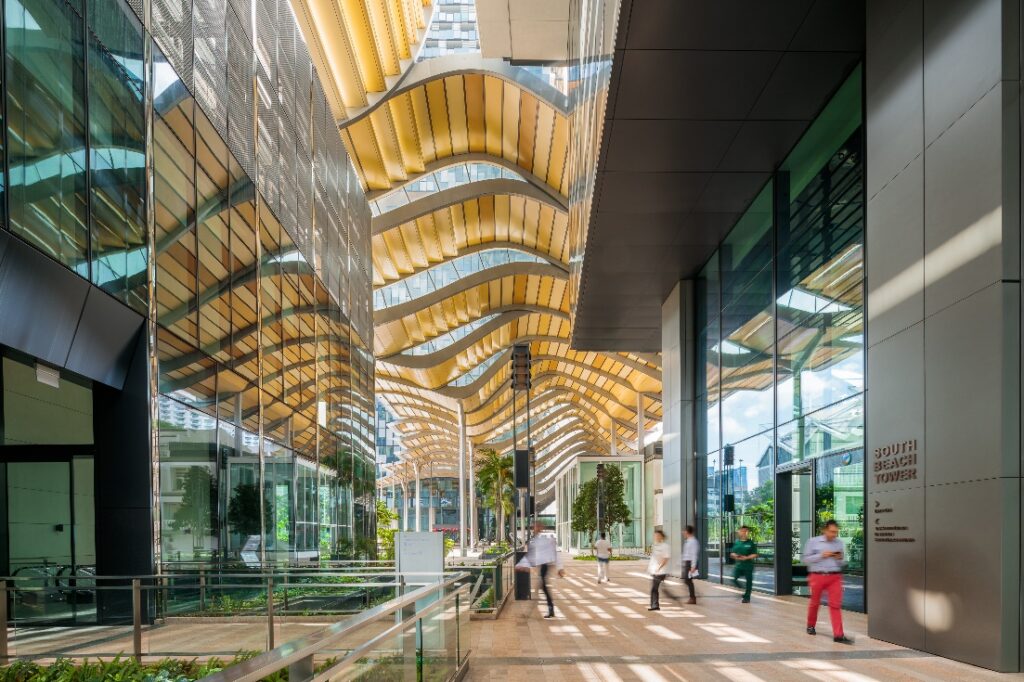
At CDL’s mixed-use development South Beach, PV panels have been installed at the tower roof and louver modules, covering a total area of approximately 1,800 m2.
What gets measured gets managed—CDL’s longstanding experience in ESG disclosure and sustainability has helped it identify gaps and improve its ESG performance. Its robust ESG integration and disclosures are widely recognised by 13 global ratings, rankings and indexes, including double ‘A’s in the 2021 CDP Global A List for corporate climate action and water security.
CDL is honoured to have achieved its best performance in the Corporate Knights’ 2022 Global 100 Most Sustainable Corporations in the World, jumping from 40th place in 2021 to 5th position this year. In addition, it has maintained its ranking as the world’s top real estate management and development company and Singapore’s top sustainable company for the fourth consecutive year, and has been the first and only Singapore company to be included in the renowned index for 13 consecutive years.
The race to zero requires conviction and engagement with all stakeholders. After two decades of integrating ESG into our business, we have captured growth opportunities while mitigating ESG risks, enhancing value for our investors, communities, and the planet.
Environmental, Social and Governance (ESG) integration is no longer a choice today. In the global Race to Zero[1], led by UNFCCC, over 5,200 businesses, 1,040 cities and 440 investors have stepped up their ambition and joined the global alliance to catalyse climate change. Following COP26, over 90% of global GDP has committed to achieving net zero by or near mid-century.[2] According to the 17th Edition of the World Economic Forum Global Risks Report, environmental risks were perceived to be the five most critical long-term threats over the next 10 years.[3] Climate risks are investment and business risks – the damage caused by climate change is projected to result in an increase of up to 41% of global property premiums until 2040.[4] With the building and construction sector accounting for about 40% of global carbon emissions[5], the real estate sector is in a prime position to advance sustainable development.
Integration: Strong Fundamentals for Business and Climate Resilience
City Developments Limited (CDL)’s ESG strategy stems from its corporate ethos, “Conserving as we Construct” established in 1995. Its value creation business model is anchored on four key pillars—Integration, Innovation, Investment, and Impact; guiding CDL to achieve three key deliverables: “Decarbonisation”, “Digitalisation & Innovation” and “Disclosure and Communication”. The CDL Future Value 2030 sustainability blueprint, implemented in 2017, maps out clear strategic goals and ESG targets across CDL’s business strategies and operations.
CDL’s sustainability portfolio reports directly to the Board Sustainability Committee with ESG factors effectively integrated into its business, operations and growth strategy. In 2018, the CDL Group introduced its G.E.T. strategy—focusing on Growth while adopting an ESG lens, Enhancement of assets to drive operational efficiency and Transformation to deliver long-term and sustained value.
Innovation: Scaling up Sustainable Technologies for a Green Revolution
Recognising that innovation is a key accelerator of climate solutions, CDL set up a Green Building & Technology Application team in 2020. The team collaborates with the organisation’s Enterprise Innovation Committee, leveraging cutting-edge technology to reduce CDL’s carbon footprint in the way it designs, builds, and manages its assets.
To advance circularity solutions, CDL is studying the feasibility of advanced low-carbon construction methods and materials to reduce embodied carbon. To do this, CDL has ramped up on buildable designs moving towards less labour-intensive processes, and focuses on Integrated Digital Delivery and Design for manufacturing and Assembly (DfMA) technologies. Through this, CDL can reduce reliance on on-site workers, enhance workplace safety and health, and drive productivity improvements in construction and facility management.
CDL also capitalises on the power of cross-sector partnerships to develop low-carbon technologies. The company has partnered with the Solar Energy Research Institute of Singapore to pilot Building-Integrated Photovoltaics (BIPV) modules and panels at various developments. The pilot on Bifacial BIPV panels with prints at CDL’s Sustainability Academy aims to optimise aesthetic value whilst generating power.
CDL and SERIS piloted a new generation of PV art wall (bifacial BIPV panels) at the Singapore Sustainability Academy at City Square Mall in 2020. This serves as a testbed for more efficient PV Installations
In order to achieve a net zero world, zero energy buildings are the way forward. To date, CDL has built two net zero facilities using eco-friendly technologies—the Singapore Sustainability Academy (SSA) and the CDL Green Gallery at the Singapore Botanic Gardens. The SSA, a BCA Green Mark Platinum-certified building, is the first in Singapore to have its construction materials, Cross Laminated Timber and Glued Laminated Timber, verified by the Nature’s BarcodeTM system as coming from responsible sources.
The SSA is the first ground-up initiative and zero-energy facility in Singapore dedicated to capacity building and thought leadership for climate action. Since its opening in 2017, it has tapped on 3,200 sq ft of solar panels on its rooftop as its energy source. The entire facility is built with over 80% of structural materials that come from sustainable sources.
In February 2021, CDL became the first real estate conglomerate in Southeast Asia to sign on to the World Green Building Council’s (WorldGBC) Net Zero Carbon Buildings Commitment. At COP26, CDL was one of 44 pioneering companies to expand its commitment towards a net-zero whole life carbon-built environment. Through this commitment, CDL pledged net zero operational carbon by 2030 for its new and existing wholly-owned assets and developments under its direct operational and management control. This also entails a reduction in embodied carbon and compensating residual upfront emissions via offsetting for new developments by 2030 and for all buildings to be net zero carbon by 2050.
To move towards a low carbon economy, CDL has aligned itself with even more ambitious carbon emissions reduction targets that have been successfully assessed and validated by Science Based Targets Initiative (SBTi) in 2021, in line with a 1.5°C warmer scenario. CDL was the first Singapore real estate company to validate its targets by SBTi for a 2°C warmer scenario in 2018.
The CDL Green Gallery is built with several eco-friendly technologies, including two innovative features – the biomaterial known as Hempcrete (largely made from the hemp plant) and a prefabricated modular system.
Investment: Building Leverage for the Future via Sustainable Finance
CDL’s Republic Plaza Green Bond was the first green bond issued by a Singapore company in April 2017.
CDL has secured more than $3 billion worth of sustainable finance, in the form of various green loans, a green bond, and a sustainability-linked loan, to help accelerate its green building action. It takes pride in issuing the first green bond by a Singapore company in 2017, which has helped to tap into alternative financing streams. In September 2021, CDL secured a discount for the SDG Innovation Loan provided by DBS Bank Ltd, for its successful R&D and pilot of digiHUB. This enabled CDL to be the first Singapore entity to achieve a discount on a sustainability-linked loan through the adoption of an innovative project that supports the SDGs on a large-scale basis.
At CDL’s mixed-use development South Beach, PV panels have been installed at the tower roof and louver modules, covering a total area of approximately 1,800 m2.
What gets measured gets managed—CDL’s longstanding experience in ESG disclosure and sustainability has helped it identify gaps and improve its ESG performance. Its robust ESG integration and disclosures are widely recognised by 13 global ratings, rankings and indexes, including double ‘A’s in the 2021 CDP Global A List for corporate climate action and water security.
CDL is honoured to have achieved its best performance in the Corporate Knights’ 2022 Global 100 Most Sustainable Corporations in the World, jumping from 40th place in 2021 to 5th position this year. In addition, it has maintained its ranking as the world’s top real estate management and development company and Singapore’s top sustainable company for the fourth consecutive year, and has been the first and only Singapore company to be included in the renowned index for 13 consecutive years.
The race to zero requires conviction and engagement with all stakeholders. After two decades of integrating ESG into our business, we have captured growth opportunities while mitigating ESG risks, enhancing value for our investors, communities, and the planet.
Cushman & Wakefield’s Asia Pacific Office Fit-Out Cost Guide 2022
Cushman & Wakefield’s Office Fit-out Cost Guides provide an indication of the fit-out construction costs for occupiers across key cities around the world. Whether it’s a basic, collaborative, or advanced hybrid fit-out requirement, these Guides compiled by our Project & Development Services team serves to assist occupiers in defining their capital planning and relocation budgets.
The Guides include a comprehensive fit-out cost section covering furniture, professional fees, mechanical & electrical works, construction works, audio visual/IT and other miscellaneous costs, as well as reinstatement and retrofit costs.
Estimated costs provided in our Guides are indicative of market averages based on certain assumptions. Exact costs for specific projects may differ to those presented – we recommend engaging a Project & Development Services professional to advise on precise costings based on your unique construction requirements.
Asia Pacific Guide 2022 Highlights
One clear factor that has come out of the COVID-19 pandemic so far has been the resilience of the Asia Pacific region.
However, many uncertainties remain especially around what the office of the future will look like and how employees will occupy and use that space. With this we have seen a shift in how corporates are envisioning their space requirements, which in turn impacts fit-out decision-making, all within an environment where costs are still being closely scrutinized.
For 31 key cities across 14 markets in APAC, this year’s Guide External Link covers:
A comprehensive fit-out cost breakdown including furniture, professional fees, and construction works
Average costs to reinstate office spaces
Cost estimates of the different styles of fit-out to cater to the post-pandemic workforce
Average retrofitting costs for a budget-friendly alternative if you’re looking to update and refresh your office environment
Real estate investment in 2022: Asia Pacific (Savills)
Pandemic restrictions and geopolitical worries did not hold back Asia Pacific real estate investors in 2021, which should mean that any further improvement will be greeted by more optimism.
The region’s real estate markets were remarkably resilient in 2021, with an estimated 30% rise in volumes compared with 2020, a record bounce back. Whether there are similar levels of activity ahead is dependent on how the pandemic develops and the response of policy makers.
Omicron has scared governments worldwide into clamping down on travel and trade, however markets have been less concerned about a variant that appears to cause milder symptoms. Higher vaccination rates (Asia is 50% fully vaccinated but some nations have more than 70% double-jabbed) and better treatments should encourage more countries to relax travel restrictions and ease social distancing.
There are reasons to be positive: Asia Pacific economies recovered lost GDP growth this year and will grow further in 2022, led by India (8.8%) and China (8.2%), although Hong Kong and Singapore forecasts (6.5% and 6.4% respectively) are also bullish. The weight of capital allocated to the region by private equity real estate funds suggests active deal making ahead. While a relatively benign inflationary environment suggests a modest interest rate rise.
Of course, there are risks, least of all around geopolitical tensions. The region’s economies are more integrated following recently negotiated trade agreements, and any tariffs changes or import restrictions will create a widespread negative impact.
If the same trends observed in 2021 persist then cross-border investors will remain focused on the larger, more liquid markets of Korea, Australia and Japan, while China’s investment levels, although high, will be driven by domestic buyers. For the international investor, Asia’s largest economy is beset by uncertainties over zero-Covid policies, debt bubbles and shifting government priorities. Hong Kong increasingly moves in sync with the Mainland. Singapore’s stability, however, should maintain its allure.
Industrial & logistics will continue to be the favoured sector, despite supply chain disruption. The sector has come to encompass a broader range of uses including manufacturing and storage, R&D, data centers, high-tech manufacturing, last mile delivery/urban logistics and temperature-controlled facilities.
Life sciences, flexible office space, senior housing and multifamily housing will remain popular. The prospects for the traditional offices, high end or tourism-related retail and hospitality are less certain. The pandemic, combined with advances in technology and changing habits, is causing investors to rethink strategies. Regional retail and hospitality rely heavily on cross-border tourism, particularly from mainland China, and without a resumption of travel it is difficult to see a way forward.
Older offices in core business districts face challenges from technology-enabled hybrid working. Meanwhile, younger generations expect a different experience from seasoned staff, with a greater emphasis on wellbeing, collaborative spaces and virtual communications.
Sustainable buildings are attracting investors, developers and occupiers, among a rising tide of regulation and a growing awareness of ESG. Net zero pathways and low energy buildings will become a priority over the coming years. Mounting evidence of a ‘green premium’ suggests a tangible shift is underway and investors don’t want to be left behind.
Asia-Pacific prime office rents rise for first time since pandemic
Knight Frank’s Asia-Pacific Prime Office Rental Index saw a 0.3% quarter-on-quarter increase, the first uptick since Q3 2019, before the start of the pandemic. Overall vacancy remains elevated at 12.8%, but office rents are likely to have bottomed out, thanks to improving business sentiments and a gradual and more sustainable return to workplaces, especially among big tech occupiers taking advantage of lower rents to move into high-quality CBD office spaces.
While conditions remain tentative due to the Omicron variant, we expect rents to continue stabilising into 2022 with more markets in the region reaching an inflexion point in the rental downcycle. As occupiers continually evolve their space strategies on the adoption of hybrid working styles, 2022 will be a year of reset and experimentation. However, this does not mean less demand for office spaces. We expect leasing activity to strengthen into 2022, with demand underpinned by the integration of flexible space solutions and a pivot to quality spaces that emphasises wellness and employee experience.
The Market Outlook for 2022 looks at Hong Kong’s core sectors (office, industrial, retail, investment) and has forecast a measured yet steady market stabilisation in year of continued recovery, renewal and reset. The research explains we expect a moderate start to the year, with momentum gathering pace from the second quarter onwards. Prices and rents have reset to a more attractive level, and we see now as a good time for investors and occupiers to drive their real estate strategies to capitalise on growth opportunities.
Cushman & Wakefield’s Global Data Center Market Comparison
Explore a unique way to assess and score 55 global primary and emerging data center markets utilizing 13 criteria.
Explore a unique way to assess and score 55 global primary and emerging data center markets utilizing 13 criteria.
The last two years have been remarkable in many ways. Industries across the board have been confronted with change and disruption—and the data center industry has been no exception. In early 2020, many businesses faced a sudden and heightened need for greater cloud technology to connect a dispersed workforce and enable people to do their jobs in a work-from-home environment. The trend continued in 2021 as cloud migration accelerated, the need for data centers continued to grow and as major data-producing platforms—hyperscalers like Google, Amazon, Microsoft, Alibaba, Apple and others—spread their data center footprints throughout the world. Today, the question is no longer whether the largest hyperscale data center users will expand to new regions each year, but how many will expand and how quickly.
It’s in this time of both great demand and prolific expansion—but also amidst an increasing focus on sustainability in parts of the world—that we publish this third annual edition of Cushman & Wakefield’s Global Data Center Market Comparison.
Kemmu Kawai joined Longevity Partners Japan in September 2022 as the Country Director. Based in Tokyo, he oversees all operations and activities in Japan, the Asia-Pacific region and beyond. He brings him more than 16 years of experience in finance where he specialised in real estate and credit investments. Before joining Longevity Partners, he served as a Portfolio Manager at Norinchukin Bank and as Investment Manager at Center Point Development.