Zero-carbon strategies for real estate markets in emerging Asia: India case study (Property Research Trust)
Environmental sustainability has taken on increased global significance in recent years, with an increased focus on climate resilience and net-zero carbon (NZC) strategies. This is particularly relevant to the real estate industry as it seeks to future-proof real estate portfolios using effective climate risk management strategies. Environmental sustainability issues are equally applicable in both the developed and emerging real estate markets.
This report focuses on net-zero carbon strategies for real estate in India. We conducted interviews with leading players in India’s real estate industry. This enabled in-depth understanding and insight into the critical issues for achieving net-zero carbon in India and identified the most effective pathways forward for real estate. Many of the issues concerning India are equally relevant to other emerging markets in Asia, so this report should also appeal to a wider audience.
This study evaluates key barriers, challenges, and opportunities in the adoption of NZC and recommends strategies for the low-carbon transformation of India’s real estate sector.
The race to Net Zero – for commercial buildings in Singapore (Colliers)
Globally and especially in Singapore, the race to Net Zero has long begun. Like running any race, the motivation and plan must be clear. This paper lays out the urgency and steps to win this race for both commercial real estate owners and occupiers.
Net Zero buildings enhance resilience to energy supply disruptions and reduce dependence on fossil fuels. Although there may be initial costs, long-term savings through reduced energy expenses and increased property value are significant benefits. Net Zero buildings also offer a healthier and more productive environment for tenants, leading to higher occupancy rates and rents.
Finally, a couple of case studies demonstrate the potential savings for typical landlords and occupiers in the commercial space from optimising energy use (without additional capital expenditures) through simulation-based solutions; adopting the smart scheduling of energy use can lead to substantial cost and emission reductions.
Decarbonizing Asia’s Built Environment: A Strategic Blueprint
The climate impact of the real estate sector cannot be understated, with buildings contributing nearly 40% of global carbon emissions. Asia, home to over half of the world’s urban population, plays a critical role in this equation, with the region’s emissions projected to increase as urbanization and development accelerate.
With approximately 70 billion square meters of real estate expected to be developed in Asia over the next two decades, the region has the potential to not only reduce emissions but to set new standards in sustainable urban planning and construction.
Key Decarbonization Strategies for Asia:
Limiting Urban Sprawl: Urban expansion in Asia has often led to low-density developments, resulting in higher emissions due to increased infrastructure demands. Cities can mitigate these impacts by focusing on high-density, mixed-use developments, creating efficient urban spaces that minimize transportation needs and reduce the overall carbon footprint.
Sustainable Construction Practices: The materials and processes used in construction have a significant carbon impact. By adopting innovative materials and techniques, such as using greener concrete mixes, and integrating supplementary cementitious materials, developers can dramatically cut emissions. For example, certain concrete mixes can reduce carbon emissions by up to 40% compared to traditional materials.
Carbon Capture and Storage: Emerging carbon capture technologies offer promising solutions to reduce emissions from the manufacturing of construction materials. Though still in early stages, these technologies have the potential to significantly cut emissions if adopted at scale.
Advanced Data and AI Solutions: Accurate data tracking is essential for effective emissions management. Technologies that integrate data from utility bills, smart meters, and Building Management Systems enable real-time tracking and smarter energy management, reducing emissions tied to building operations.
A Path Forward for a Sustainable Asia
The decarbonization of Asia’s built environment represents both a challenge and a $47 trillion economic opportunity, driven by the need to align with global climate goals while catering to the unique demands of the region. Achieving this requires a targeted approach, one that equips developers, investors, and policymakers with strategies that balance sustainability with Asia’s rapid growth.
To dive deeper into these strategies, download the whitepaper “From Concrete to Carbon Neutral: Decarbonizing Asia’s Built Environment”.
From Concrete to Carbon Neutral: Decarbonizing Asia’s Built Environment (Accacia)
Buildings contribute 40% of global carbon emissions, with Asia representing half of the world’s real estate markets. This whitepaper presents an Asia-first approach to decarbonizing the region’s built environment, addressing rapid urbanization and fragmented geographies through industry case studies. It outlines key strategies, highlights capital investment opportunities, and offers a roadmap for sustainable growth.
While venture capital in sustainable building tech is rising globally, Asian startups secure only 10% of this funding. Technology-led solutions are critical to helping Asia leapfrog towards decarbonization, with both venture capital and corporate initiatives playing essential roles. This transition is estimated to represent a $47 trillion opportunity.
Cushman & Wakefield released its 2023 Sustainability Report, highlighting the firm’s global impact and progress across key sustainability areas. The report underscores the company’s commitment to embedding sustainability in its operations and service offerings, helping clients achieve their goals while strengthening corporate reputation and mitigating risks. It reflects Cushman & Wakefield’s focus on transparency, accountability, and continuous improvement in environmental, social, and governance (ESG) performance. Chief Sustainability Officer Jessica Francisco emphasized the firm’s dedication to shaping a sustainable future, not only for clients and stakeholders but for the planet. Cushman & Wakefield is actively reducing its environmental impact, fostering a diverse and inclusive workplace, and enabling clients to meet their sustainability objectives. With ambitious future targets, the firm is focused on taking immediate action for a better, more sustainable future.
Mindspace Business Parks REIT – ESG Report 2023-24
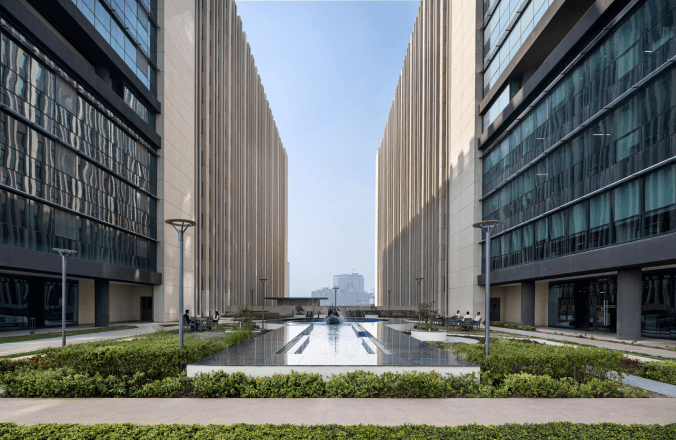
Mindspace Business Parks REIT Group is proud to present its third ESG report for the Financial Year (FY) 2024. Sponsored by the K Raheja Group, Mindspace Business Parks REIT (“Mindspace REIT”) and its Asset SPVs (hereafter referred to as “Mindspace REIT Group” or “Mindspace REIT” or “Group” or “we” or “us” or “our Entity”) are defining the future of efficient and equitable workspaces that are designed around the pillars of occupant wellness and sustainability.
Guided by an impact led ESG strategy, we encourage broader stakeholder participation to expand the reach of our sustainability practices and catalyze change across the larger ecosystem beyond our properties. As we grow our footprint to accelerate long-term value creation for our stakeholders, we continue to be powered by our ESG strategy.
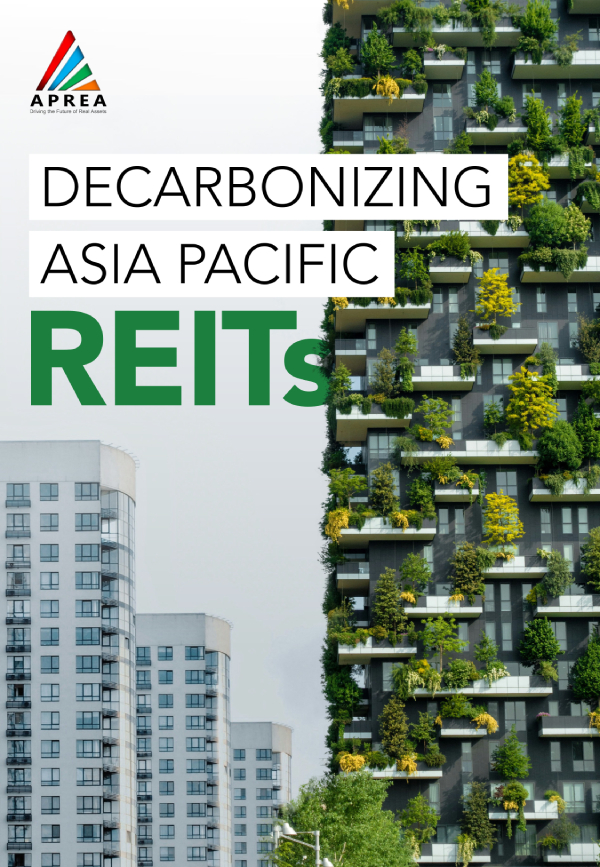
Asia Pacific REITs are leading the charge in sustainability, driving the decarbonization of the region’s real estate. With over 200 REITs and a market cap surpassing $250 billion, they are setting new standards for green assets and aligning with net-zero goals.
However, climate risks and regulatory pressures loom large, making it imperative for REITs to innovate and collaborate to safeguard their assets and seize the massive opportunity in sustainable growth. Learn how APAC REITs are navigating these challenges and pioneering a resilient, green future.
Sigrid Zialcita
CEO APREA
Sigrid is the Chief Executive Officer of Asia Pacific Real Assets Association (APREA). Based in Singapore, she is responsible for overseeing the strategic direction, initiatives and operations of the association across Asia Pacific. Under her leadership, APREA repositioned to an industry trade group focusing on real estate and infrastructure.
Sigrid joined APREA’s executive team in January 2019.
Prior to APREA, she served as Managing Director of Asia Pacific Research and Advisory Services of Cushman & Wakefield (C&W) from 2010 through 2018, where she was responsible for research, thought leadership, strategy formulation and client management. Before relocating to Singapore, she was based in Washington, D.C. and led C&W’s U.S. research group in the Mid-Atlantic region, overseeing all aspects of market research activities in the Washington, DC; Virginia; Suburban Maryland, Baltimore; and Philadelphia areas. Prior to joining C&W, Sigrid served as a Senior Economist for the National Association of Realtors (NAR). In that position, she developed NAR’s office, warehouse, retail, multi-family housing, and international research programs.
A recognized expert in global economic, public policy and real estate issues, Sigrid is a frequent speaker at industry events. Her commentary on commercial and residential real estate markets is also regularly featured in a wide array of global publications, including the Wall Street Journal, Financial Times, Bloomberg, New York Times and Reuters. Additionally, she has made several television appearances on financial networks and radio such as CNBC, Bloomberg, CNN, National Public Radio and Channel News Asia.
Sigrid holds a Master of Business Administration from Cornell University’s Johnson Graduate School of Management and a Master’s degree in Economics from Pennsylvania State University. She is a member of several civic groups including the Rotary Club of Raffles City in Singapore, where she has served in various leadership positions, and serves in the Executive Committee of the Crohn’s & Colitis Society of Singapore.
David Fogarty
Head of ESG Consulting & Sustainability Services Paia FROM CBRE, APAC
David Fogarty is the Head of ESG Consulting & Sustainability Services, Paia FROM CBRE, APAC.
He has previously the roles of Executive Managing Director for Property Management in the United Kingdom, Managing Director, Property & Asset Management Singapore and Southeast Asia, and Regional Director, Asset Services, Pacific (Australia and New Zealand).
David is a passionate advocate for creating an environment where people thrive, building communities and connections, integrating technology, sustainability, and people to help shape the future of the workplace and real estate.
With over twenty-five (25) years’ experience adding value in the industry across a range of commercial, retail, residential, mixed use, hospitality, and industrial property, David has successfully led Asset, Property and Sustainability businesses, building effective teams, driving strong growth, performance, and profitability.
The Green Transformation of Logistics Real Estate (CBRE)
There is a growing emphasis on sustainability and environmental footprint in the transportation and logistics industries worldwide, with nearly 70% of companies from these sectors in the Fortune 500 having set a net zero carbon target, and around half aiming to achieve this objective by 2030 or earlier. This growing trend is also influencing logistics occupiers’ real estate decision-making worldwide.
In Asia Pacific, an increasing number of logistics occupiers are seeking more environmentally friendly warehouses and distribution centres. CBRE’s June 2024 Asia Pacific Leasing Market Sentiment Index found that energy-related features, particularly renewable energy supply and energy efficiency management, are most preferred. Many survey respondents indicated that occupiers also have a preference for facilities that possess some form of green certification, and that provide charging infrastructure for electric vehicles.
With more occupiers embedding sustainability into their real estate strategy, landlords and investors must accelerate the greening of their Asia Pacific logistics portfolios.
This Viewpoint explores occupiers’ most sought-after green features and explains how asset owners in the region should respond to rising demand for environmentally friendly logistics real estate.
Nature Positive: Guidelines for the Transition in Cities (World Economic Forum)
This report, published in collaboration with Oliver Wyman, highlights the pivotal role of cities in leading the global fight against climate change and biodiversity loss. Coordinated city action for nature is not only vital to achieving the goals set by the Global Biodiversity Framework (GBF), but also strategically necessary given the climate-, health- and infrastructure-related urban challenges arising from existing unbalanced relationships with nature and the biosphere.
The pivotal role cooling can play for meeting company ESG objectives
ESG reporting has brought the conversation on “Net Zero” from the halls of multilateral organisations to corporate boardrooms across the world. Over the past decade, companies have been looking to better their ESG records. In India, since 2023, the Securities and Exchange Board of India (SEBI) has mandated the top 1000 listed companies (by market capitalisation) to file a business responsibility and sustainability report (BRSR) that discloses environmental data including energy, emissions, water, and waste. Starting from financial year 2024-2025 ESG disclosures are also applicable for the value chains of the top 250 listed entities (by market capitalisation) on a comply-or-explain basis.
Large corporations can look to cooling systems in their building infrastructure and operations to improve ESG performance across BRSR-defined KPIs of water & energy footprint, associated GHG emissions, circularity of resources, in addition to other social- economic parameters. In India, the buildings’ sector (residential and commercial) is responsible for 33% of total electricity consumption, projected to increase to 55% demand of total electricity generated by 2047. The building and construction sector also accounts for 32% of the total national GHG emissions inventory. Of a building’s total demand for energy, 57% is towards cooling requirements alone. As per the 2023 World Energy Outlook of the International Energy Agency (IEA), India experienced a 21% increase in electricity consumption from space cooling between 2019 and 2022. Being a developing and a rapidly urbanizing country, India expects to see a 1.5-2x increase in area under building construction in 2027, as compared to 2017, which combined with heat generation and Urban Heat Islands (UHI) effect from vehicles, appliances (air conditioners, refrigerators, etc), and decline in tree cover will further increase the electricity demand for cooling.
Businesses, especially those with large campus requirements, have the capacity to, on one hand, adopt innovative building design that incorporates passive measures to reduce the upfront cooling demand on a square metre basis. On the other, they are also well positioned to adopt disruptive cooling technologies such as district cooling/cooling as a service (CAAS) to meet residual cooling demand in a sustainable manner. Tabreed has demonstrated success across several ESG metrics in its existing projects through the Cooling as a Service model. For instance, at Tata Realty’s Intellion Park in Gurugram, Haryana, cooling system designed, built and operated by Tabreed, is able to serve 700 sft of area per ton of cooling to achieve an energy performance index of 70-90 kWh/m2/year.
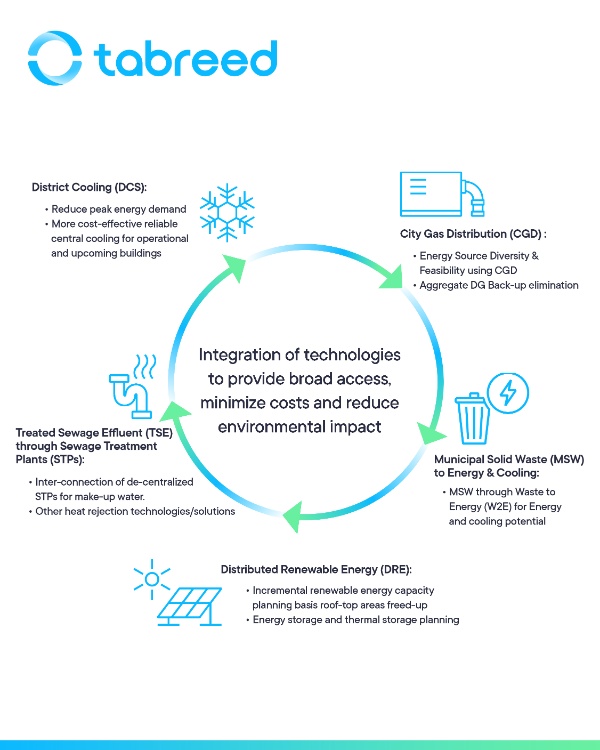
District cooling also allow for integrated solutions that can help achieve ESG requirements beyond energy. For example, district cooling plants can utilize grey water from on-site Sewage Treatment Plants (STP) which is generally discharged straight into rivers and lakes. Similarly, district energy integrated with waste to energy plants & city gas distribution plants can first, allow utilization of waste heat for cooling, second, reduce grid power requirement, and third, replace highly polluting Diesel Generator (DG) sets in case of grid failures by creating redundancy. The possibilities for using district energy as a means to achieve integrated solutions that improve resource efficiency from a systems’ lens are limitless. There is an opportunity here for businesses to not only become more sustainable & cost effective, but truly move the needle on energy and resource efficiency for the country.
Sudheer Perla
Managing Director, Tabreed Asia Country Manager, India, Tabreed
Kemmu Kawai joined Longevity Partners Japan in September 2022 as the Country Director. Based in Tokyo, he oversees all operations and activities in Japan, the Asia-Pacific region and beyond. He brings him more than 16 years of experience in finance where he specialised in real estate and credit investments. Before joining Longevity Partners, he served as a Portfolio Manager at Norinchukin Bank and as Investment Manager at Center Point Development.