

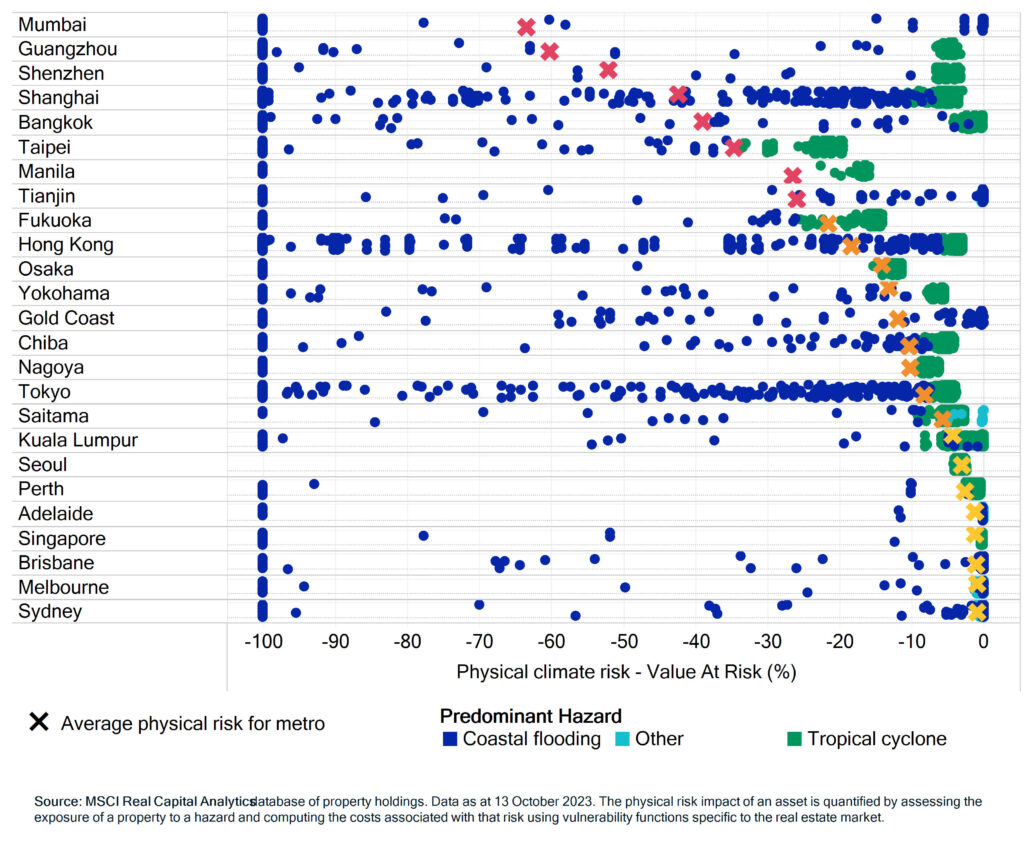
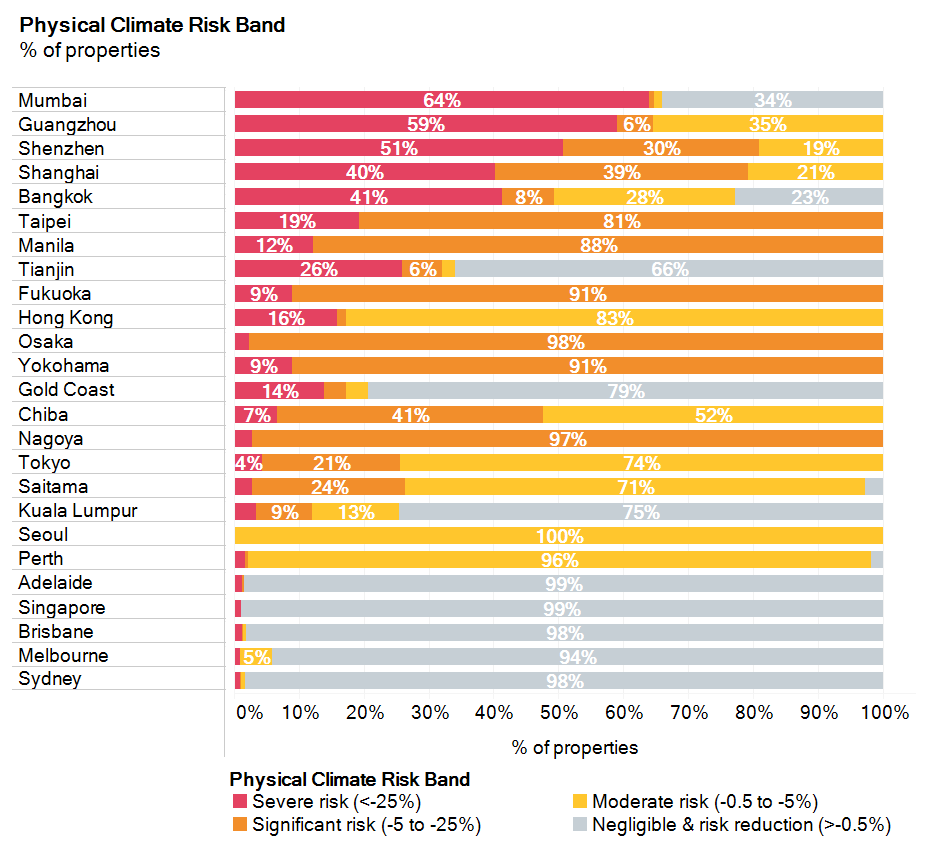
Applying climate analysis to MSCI’s Real Capital Analytics database of global property holdings, we can see a broad range of aggregated physical climate risks across real estate in selected Asia-Pacific cities. As we previously showed for cities worldwide, these risks were not equally distributed within each city.
Once again, location and topography were decisive factors behind the impact of physical climate change, reinforcing the idea that investors may wish to consider climate risk at the individual asset level, rather than relying solely on market-level data.
The charts below illustrate Average physical risk vs. risk distribution across major Asia-Pacific metros
Physical Climate Risk
Average for metro and asset-level
Physical Climate Risk Band
% of properties

Niel Harmse
Vice President
MSCI Research ×

Niel Harmse
Vice President
MSCI Research
Niel Harmse works on the real estate-solutions research team. He focuses on performance measurement, portfolio management and risk-related research for asset owners and investment managers. Prior to joining MSCI, Niel was an investment analyst at Old Mutual Property and a research analyst at Investment Property Databank. He holds a B.Com in economics and a B.Com, with honors, in econometrics from the University of Johannesburg.