APREA Logo

Knowledge Hub

Southeast Asia (SEA) is expected to be one of the leading sources of growth for the global economy as the United States and Europe tiptoe around a potential recession. Cushman & Wakefield’s latest paper explores how SEA real estate market is positioned to develop given the latest economic and property trends. The report looks at the impact of China’s re-opening and rising interest rates and provide our views on investment opportunities, rents and capital value outlook for major property markets in SEA.

Please find below the rebalancing results for the following GPR/APREA index series, which will become effective as of 20 March 2023 (start of trading):

  • GPR/APREA Investable 100 Index
  • GPR/APREA Investable REIT 100 Index
  • GPR/APREA Composite Index
  • GPR/APREA Composite REIT Index (indicated with an asterisk)

GPR/APREA Investable 100 Index

INCLUSIONS

AUSNSR ATNational Storage REIT
SGPLREIT SPLendlease Global Commercial REIT
THASIRI TBSansiri PCL
THASPALI TBSupalai PCL

EXCLUSIONS

CHN6158 HKZhenro Properties Group LtdLiquidity too low
JPN3278 JTKenedix Residential Next Investment CorpLiquidity too low
JPN3453 JTKenedix Retail REIT CorpLiquidity too low
VNMVRE VMVincom Retail JSCLiquidity too low

GPR/APREA Investable REIT 100 Index

INCLUSIONS

SGPFHT SPFrasers Hospitality Trust
SGPPGNREIT SPParagon REIT

EXCLUSIONS

KOR034830 KSKorea Real Estate Investment & Trust Co. Ltd.Liquidity too low
NZLGMT NZGoodman Property TrustLiquidity too low

GPR/APREA Composite Index + GPR/APREA Composite REIT Index

INCLUSIONS

CHNBHGREIT SPBHG Retail REIT *
PHLRCR PMRL Commercial REIT *

EXCLUSIONS

The world is in transition. We are seeing the shift towards a low carbon economy. The transition is a response to climate change, technological innovation as well as demographic shifts. The transition to a low carbon economy requires collaboration across all sectors, from investors, regulators and customers.

At BlackRock, we believe that climate risk is an investment risk. By investing in properties that take into consideration financially material physical and transition risks, alongside other information, investors may create a more resilient and valuable portfolio. It supports responsible business practices and leads to risk-adjusted financial benefits in the long term.

Sustainable investing in real estate can be a powerful way to align positive environmental and social outcomes with financial goals. As investors, part of the decision-making process is to incorporate financially material environmental, social and governance considerations, alongside other information to enhance risk-adjusted returns.

Decarbonizing hard-to-abate sectors requires technological innovation. It requires the deployment of clean energy technologies and the decarbonization of heavy industries. Government policies and regulations also play a role in low carbon transition and help provide incentives to invest in clean technologies. It is a complex and challenging task.

Improving property design and operations is crucial to reducing carbon footprint as they become resource efficient and support healthier and livable communities. The use of renewable energy, energy-efficient design, better building materials and smart technologies are some of the ways that asset owners and managers can prioritize to add value to the property. Smart technologies can be used to monitor energy use, water consumption and other aspects of building operations. The use of renewable energy in real estate can be one of the best ways to reduce carbon footprint and reduce energy costs in the long run.

In addition to these strategies, asset owners can also focus on creating more sustainable communities. Building designs that connect to public transportation and cycling paths and incorporating amenities such as green spaces can promote a healthier lifestyle.

Overall, real estate has a significant role to play in sustainability, and by adopting sustainable practices and technologies, real estate owners can future-proof their assets by reducing their environmental impact, improving their communities, and creating a more sustainable future.

Wincel Kaufmann

Head of Sustainable Investing
APAC Alternatives
BlackRock ×

Wincel Kaufmann

Head of Sustainable Investing
APAC Alternatives
BlackRock

Cushman & Wakefield’s Office Fit Out Cost Guides provide an indication of the fit out construction costs for occupiers across key cities around the world. Whether it’s a basic, collaborative, or advanced hybrid fit out requirement, these Guides compiled by our Project & Development Services team serves to assist occupiers in defining their capital planning and relocation budgets.

The Guides include a comprehensive fit out cost section covering furniture, professional fees, mechanical & electrical works, construction works, audio visual/IT and other miscellaneous costs, as well as reinstatement and retrofit costs.

Estimated costs provided in our Guides are indicative of market averages based on certain assumptions. Extra costs for specific projects may defer to those presented – we recommend engaging a Project & Development Services professional to advise on precise costings base don your unique construction requirements.


APAC Guide 2023 Highlights

Most, if not all, companies have adopted some form of hybrid working model, often in response to employee expectations of increased workplace flexibility. Similarly, sustainability targets are increasingly becoming the norm, as are more visible practices to foster and promote diversity, equity, and inclusion (DE&I). The role of technology has never been more important – both as an enabler of change and as a means of measuring the impacts of change.

Together, these factors mean that the fitting out of office space goes beyond how the space looks, to include how the space contributes to a company’s financial, social, and sustainability goals whilst also reflecting corporate brand and culture.

For 32 key gateway cities across 12 markets in APAC, the Guide covers:

  • 4 key considerations for a best-in-class office fit out: workplace strategy & change management, sustainability, procurement, and technology
  • Cost estimates of the different styles of fit out to cater to the post-pandemic workforce
  • “All-in” comprehensive fit out cost breakdowns that includes furniture, mechanical and electrical works, construction works, IT, audio visual and miscellaneous costs
  • Average costs to retrofit and reinstate office spaces

CDL’s Integrated Sustainability Report 2023 is their sixteenth sustainability report since 2008. Themed “Zero in on Positive Impact”, the digital report communicates CDL’s progress towards their material ESG goals and targets, established under the CDL Future Value 2030 sustainability blueprint. External assurance is key to enhance data credibility and instill confidence in readers. CDL’s external assurance of their sustainability report started in 2009 and has continued to expand. ISR 2022 and ISR 2023’s external assurance has been further elevated in its scope against the GRI Standards, SASB Standards, as well as the TCFD and CDSB frameworks.

This report was originally published in https://cdlsustainability.com/

This report was originally published in https://cdlsustainability.com/

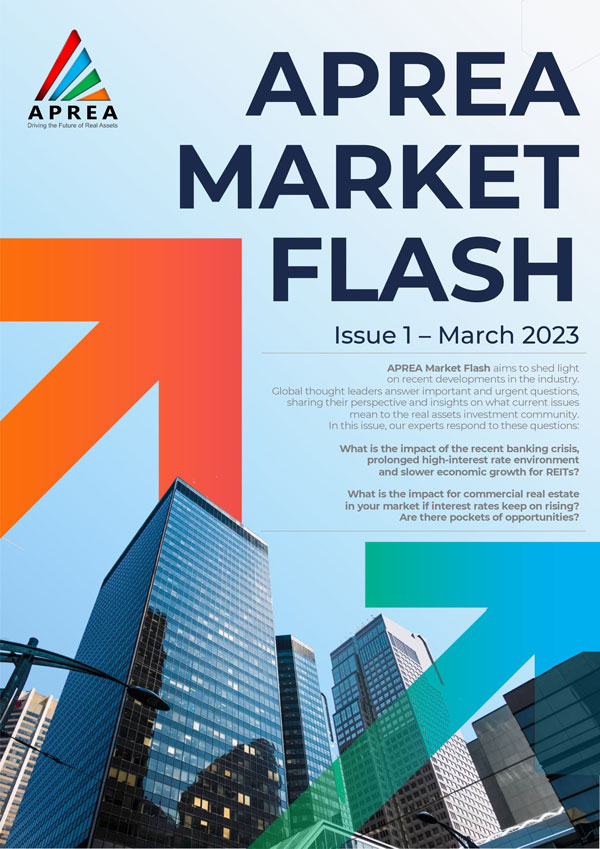
APREA Market Flash aims to shed light on recent developments in the industry. Global thought leaders answer important and urgent questions, sharing their perspective and insights on what current issues mean to the real assets investment community.

In this issue, industry experts respond to these questions:

What is the impact of the recent banking crisis, prolonged high-interest rate environment and slower economic growth for REITs?

What is the impact for commercial real estate in your market if interest rates keep on rising? Are there pockets of opportunities?

The growth of major life sciences companies has started to normalise after a period of significant growth during the height of the pandemic. Weaker revenue growth and capital funding in the face of slowing global economies is shaping a new competitive landscape for the life sciences sector and the need for companies to rethink their real estate strategy.

This report explores the latest life sciences real estate trends and their impact on real estate strategy. It also examines the latest developments in R&D Laboratory and Office portfolios, as well as investment demand.

Key highlights are below:

  • Office Portfolios: Most life sciences firms are seeking to keep costs under control and are therefore unwilling to add to their office portfolios. Workplace transformation and efficiency are a major focus.
  • R&D Laboratory Portfolios: As of the end of 2022, there was more than 100 million sq. ft. of R&D laboratory space in Asia Pacific. Solid leasing demand is driving the emergence of new life science hubs.
  • Life Sciences Real Estate Investment: Investment demand remains upbeat, with US$18 billion of funds raised for Asia Pacific life sciences real estate in the past five years. However, a shortage of assets for sale meant just US$717 million of direct investment was recorded in 2022.

This report was originally published in https://www.cbre.com/insights/reports/2023-asia-pacific-life-sciences-real-estate-trends

Released in December 2022, the Hong Kong Innovation & Technology Development Blueprint maps out the overall direction and key strategies for the city’s I&T development over the next five to 10 years with the objective of making the city more competitive and diversifying its sectors. This research paper provides the first in-depth review of the strategic plan towards developing Hong Kong into a world-leading hub for I&T and how it will bring valuable opportunities to the I&T sector and the city’s future development.

This report was originally published in https://www.colliers.com/en-hk/research/hong-kongs-i-and-t-future-and-its-property-implications

The office sector has shifted and while asset owners need to adjust so too do flexible workspace operators, otherwise flexible workspace operators, who were once seen as disruptors to the office market, will themselves be disrupted.

Shifting occupier profiles are leading to white space opportunities. We have seen an uptick in demand for enterprise solutions and turnkey offices. We believe this presents an opportunity for a managed suite product, which is a product yet to become mainstream in many Asia Pacific markets. The question is: who is best placed to deliver this?

Meanwhile, asset owners are aiming to placemake with holistic, integrated, hospitality-led amenity stacks to elevate the occupier experience. Is this an opportunity for a new type of operator?

This is an incredibly exciting time, with occupier trends driving innovation in how the market delivers the workplace of the future. This may be the dawn of Office 2.0; at the very least, it is the dawn of Flex 2.0.

This report was originally published in https://www.knightfrank.com/research/report-library/the-flexible-workspace-outlook-report-2023-2023-10012.aspx

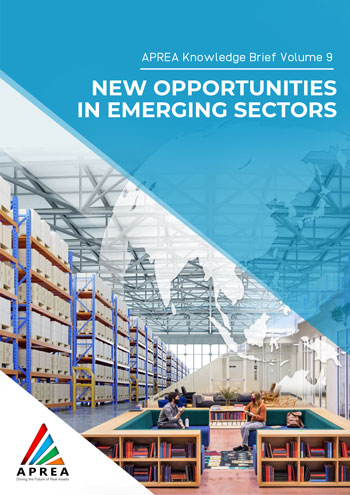
Amid the current challenging times for the global economy, the Asia Pacific region remains a bright spot. This is in part due to new and compelling opportunities for investors, especially in asset classes that go beyond the traditional sectors of residential, commercial, and retail.

This issue of Knowledge Brief explores the case for investing in niche and emerging sectors, which have been outperforming traditional asset classes. These include multifamily housing, flexible office space, senior living, healthcare and life sciences, renewables, modern industrial parks, warehousing, data centres, and more.

What are the trends and opportunities in the regional investment landscape? How has technology, as well as changing lifestyles and working practices, caused investors to rethink their strategies?

The articles in this volume discuss how opportunities abound in the real assets industry, with robust prospects for the Asia Pacific.