APREA Logo

Knowledge Hub

Cushman & Wakefield’s 2022-2023 Asia REIT Market Insight report investigates the growing Real Estate Investment Trust market in Asia, examining the primary drivers and state of play in key markets including Japan, Singapore, Hong Kong SAR, mainland China and India.

Overall, the Asia REIT market has experienced declines in stock prices and overall market values in 2022, predominantly due to the influence of the U.S. interest rate hikes. Despite this, the Asia REIT market has still performed better than its U.S. and European counterparts.

Key highlights:

  • At the close of 2022 the combined value of the Asia REIT market was at US$263.8 billion, down 14.7% y-o-y. The mainland China REIT market value surged 80% on the back of new product offerings, but the remaining Asia markets all experienced declines in market value.
  • Industrial/logistics, healthcare, and data center assets have been favored by investors as new growth drivers in recent years.
  • A total of 17 new products were introduced into the China REIT market in the period from March 2022 to June 2023.
  • REITs have also proven popular with investors in India. Consequently, we estimate that more than 20% of Grade A office stock in India will be held by REITs by the end of 2024.

Office: Office leasing volume slightly improved on a q-o-q basis but most deals involved renewals, relocations, and consolidations. All markets tracked by CBRE (except Seoul) saw vacancy increase over the quarter. Rents were flat despite solid growth in Sydney, Perth, Seoul and selected micro-markets in major cities of India.

Retail: Retail leasing activity continued to recover as retailers stayed cautiously optimistic. Site inspections by retailers rose to their highest levels in June since surveys began, thanks to resilient upgrading demand and requirements from new market entrants. Occupancy in core retail districts gradually recovered over the period, pushing up rents by 0.2% q-o-q.

Logistics: Subdued regional export demand, slowing manufacturing activity and weak e-commerce growth strained logistics leasing demand. New supply remained elevated while rents increased by 1.1% q-o-q, marking a second consecutive quarter of weaker growth.

Investment: With interest rates yet to reach their peak and property yield expansion insufficient to reflect the rising cost of finance, investment volume contracted by 37% y-o-y to US$19.2 billion. Cross-border investment volume totalled just US$4.1 billion. Negative carry continued to make investors hesitant to invest in Asia Pacific commercial real estate.

This report was originally published in https://www.cbre.com/insights/figures/asia-pacific-figure

In this month’s ESG Buzz, we explore how DEI drives corporate performance and highlight necessary steps to achieve success in this area. 

Diversity, Equity, and Inclusion (DEI) initiatives are showing some progress in the Asia-Pacific region, but they still have a considerable way to go. At SS&C Intralinks, we recognise that DEI is no longer just a buzz term for corporate reporting. Instead, these initiatives are critical in driving long-term success across every industry.

The Power of Diversity in Corporate Performance

Diversity encompasses a wide range of dimensions beyond gender and ethnicity, such as age, sexual orientation, disability, and more. Embracing diversity across these dimensions brings fresh perspectives, enhances creativity, and fosters innovation.

It should also be noted that diversity drives marked improvements across every corporate reporting metric. The Gender Diversity & Dealmaking 2022 report by SS&C Intralinks revealed that:

  • Female CEOs complete more M&A deals
  • Diverse boards and female CEOs lead to better post-deal performance
  • Acquisitions by diverse boards exhibit greater risk aversion and better performance

Additionally, McKinsey research has found that companies with high levels of executive- level diversity were 62% more likely to outperform their competitors in profitability. Another study found that when women match men’s participation in the workforce, significantly more opportunities arise that could improve Asia-Pacific’s GDP by 12.5% – the equivalent of USD $4.5 trillion.

The Current State of DEI in APAC

Kantar analysis reveals that DEI initiatives are struggling in APAC, despite growing awareness of their importance among businesses and brands. The annual global study revealed DEI initiatives were struggling in APAC markets. Although Australia showed the second-largest growth in DEI progress, Japan has gone backwards, and India underperformed, showing we still have a long way to go.

Another study by Workday found that the lack of a strategic approach in DEI was most prevalent in APAC, with more than half (52%) of respondents indicating that their organisations did not have an approach – which is concerning when compared to Europe (39%) and North America (34%).

From a reporting perspective, we see that DEI disclosure is slowly becoming a mandatory requirement across many domains. For example, the Hong Kong Stock Exchange and Singapore Stock Exchange have recently updated board diversity disclosure requirements for listed companies.

In Singapore, the voluntary target for the 100 largest companies is for 25% of the board to be female by 2025 and 30% by 2030, while South Korea has also implemented mandatory diversity quotas in 2020, requiring at least one female on the board of public companies.

Leading the way in private markets, AirTree Ventures, Blackbird Ventures, along with other VCs in Australia, have recently pledged greater transparency in revealing investments in women-led businesses to address start-up funding gender imbalance and promote diversity for better outcomes.

Steps to Building DEI Success

Creating an inclusive environment where all employees feel valued and respected is key to unlocking the true potential of diversity. This can be achieved by encouraging open dialogue, establishing mentorship programs, and implementing unconscious bias training to foster inclusivity. Every company should, at the minimum, be pursuing the following:

Addressing Pay Equity: Strive for pay equity within your organisation by regularly conducting pay audits and eliminating any unjust wage gaps. Fair compensation enhances employee morale and bolsters the company’s reputation as a socially responsible entity.

Parental Leave Policies: Promote equal parental leave opportunities and support for working parents in company policies. Encourage shared caregiving responsibilities, while fostering a family-friendly and supportive work environment.

Promoting Equal Opportunities: Ensure equal access to growth opportunities and leadership roles for all employees, irrespective of their background. Implement clear career advancement frameworks and mentorship programs to support career progression.

Embedding DEI in Company Policies: Integrate DEI principles into your organisation’s governance structure and core values. Establish clear policies against discrimination, harassment, and bias, with stringent consequences for violations.

Measuring and Reporting Progress: Set measurable goals for DEI initiatives and track progress regularly. Transparently report on DEI metrics and outcomes to stakeholders, showcasing your commitment to accountability.

Embracing DEI practices leads to tangible benefits for businesses, employees, and society as a whole. By fostering a culture of inclusivity, we pave the way for innovation, increased productivity, and long-term success. So, take the leap, embrace change, and be at the forefront of the transformative power of inclusion. Let’s make a positive impact and shape a brighter, more inclusive future for all.

Sacha Madden

Sales Director
South APAC, Alternative Investments
SS&C Intralinks

Image thumb

The real assets sector in the Asia Pacific is undergoing rapid transformation due to technological advancements, shifting demographics, and evolving investor preferences.

Governments in the region are introducing regulatory reforms to promote sustainable development and safeguard stakeholders’ interests. Despite challenges, the region’s fast-growing economies present ample opportunities for smart investors, especially with the focus on alternative asset types and sustainability initiatives.

Find out more about key regulatory developments for different markets in the APREA Real Assets Bulletin. The bulletin covers ongoing challenges and the actions that are being taken to mitigate them.

Rents in the region fell at a faster clip in Q2 2023, maintaining a year-long downward trend as Knight Frank’s Asia-Pacific Prime Office Rental Index dipped by a fourth consecutive quarter, down 1.6% quarter-on-quarter, in Q2 2023. This brings annual decline to 3.1%, which were largely due to continued soft conditions in the Chinese Mainland.

15 out of the 23 tracked cities reported stable-to-increasing rents, down from 16 in Q1 2023. Vacancies also rose marginally by a quarter of a percentage point quarter-on-quarter to 13.8%, sustaining a trend that has seen the metric rise to its highest in over 10 years since Q4 2022.

However, seen in the context of a delivery of over 4 million sf during the quarter, office demand in Asia-Pacific has held up better than those in US and Europe, with a stronger return-to-office trend. With tech occupiers continuing to rationalise employee headcount, financial and professional services firm as well as flexible space operators have made up the slack in leasing activity. Demand was also supported by a flight-to-quality trend that has pervaded across the region.

With the region entering a development phase, new supply in 2023-24 will clock in at cyclical highs, near doubling the levels in 2022, which will add close to 10% to existing stock. Consequently, market conditions across most of the region will continue to favour tenants for the rest of the year.

This report was originally published in https://apac.knightfrank.com/office-highlights

The Singapore property market remains resilient despite weakening property demand. Market rents have continued to rise amidst a tight supply pipeline. However, with weaker growth prospects and a flight to quality, the market is starting to bifurcate, with non-prime assets seeing stagnating growth.

Our latest paper explores the economic outlook for Singapore, the impact on the office, industrial, retail, private residential, and hotels sector, and latest investment trends.

Download the Report

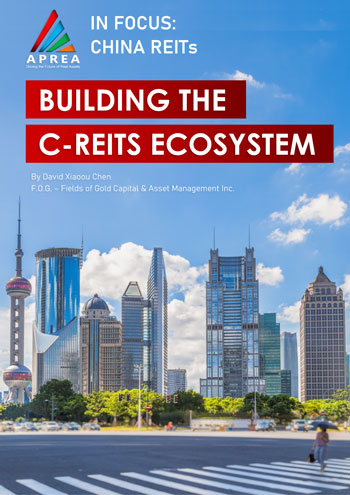
China’s first REITs were launched in 2021, following earlier exploration of real estate securitization. As of March 2023, 27 REITs have been listed in China, covering various real estate infrastructure types. The sector is transitioning from volatility to a more stable market, and opportunities for private real estate investment funds in China are expanding.

Looking ahead, Chinese REITs are expected to diversify their assets, improve valuation techniques, enhance management structures, and optimize leverage restrictions. China aims to build a REITs ecosystem based on international standards, with collaboration between local and international stakeholders playing a crucial role in its development.

  • A worldwide shortage of available power is inhibiting growth of the global data center market. Sourcing enough power is a top priority of data center operators across North America, Europe, Latin America and Asia-Pacific. Certain secondary markets with robust power supplies stand to attract more data center operators.
  • New development is occurring across all four regions despite limited power availability. Northern Virginia remains the world’s largest data center market with 2,132 megawatts (MW) of total inventory.
  • Despite new development, vacancy rates are declining in all four regions due to strong demand. Singapore—the world’s most power-constrained data center market—has less than 4 MW of available capacity and a record-low vacancy rate of less than 2%.
  • Large corporations are finding it increasingly difficult to find enough data center capacity. Low supply, construction delays and power challenges are impacting all markets. For example, Querétaro, Mexico, has only 1.2 MW available for lease.
  • The worldwide shortage of available supply is leading to price increases for data center capacity. Singapore has the highest rental rates at $300 to $450 per month for a 250- to 500-kilowatt (kW) requirement, while Chicago has the lowest at $115 to $125.
  • The rapid growth of artificial intelligence—along with other modern technologies, such as streaming, gaming and self-driving cars—is expected to drive continued strong data center demand. This will spur innovations in data center design and technology as operators aim to deliver the capacity that meets the increased power density requirements of high-performance computing.

This report was originally published in https://www.cbre.com/insights/reports/global-data-center-trends-2023

Q2 2023 Singapore Figures report provides the latest commentary and data on net absorption, rents, vacancy, supply and other key metrics in Singapore’s office, business parks, retail, residential and industrial markets, along with an analysis of real estate investment activity.

Executive Summary

Office: With a low prevailing vacancy level, gross effective rents for the Core CBD (Grade A) market increased marginally by 0.4% q-o-q.

Business Parks: Leasing activity was focused on renewals as occupiers exercised more caution due to rising global macro economic headwinds. Selected tech and R&D industries gave up space in Q2 2023.

Retail: Prime retail rents for all submarkets rose further in Q2 2023, supported by the continued recovery of the Orchard Road, City Hall/Marina Centre and Fringe areas, and the resilience of the suburban market.

Residential: Private home prices declined for the first time in three years after cooling measures.

Industrial: Prime logistics rentals have grown by 8.6% in H1 2023, despite a weak macroeconomic backdrop mainly due to limited supply.

Investment: Preliminary real estate investment volumes in Singapore for Q2 2023 declined 44.1% q-o-q and 64.3% y-o-y to $3.495 bn, mainly on sharp falls in retail and office asset sales.

This report was originally published in https://www.cbre.com.sg/insights/figures/singapore-figures-q2-2023

On 4 July 2023, the Lease Agreements for Retail Premises Bill (“Bill”) had its first reading in Parliament. The Bill seeks to make it mandatory for retail lease contracts to comply with the Code of Conduct for Leasing of Retail Premises in Singapore (“Code“).

The Code was issued by the Fair Tenancy Pro Tem Committee in 2021 and was last updated in 2022. It sets out guidelines and principles for landlords and tenants of qualifying retail premises to enable fair and balanced lease negotiations. The full Code is available here.

The Bill serves the following functions:

  • Establishes the Fair Tenancy Industry Committee;
  • Provides for the Code and the obligations of landlords and tenants in relation to the leasing principles contained therein; and
  • Establishes a dispute resolution process in relation to complaints of non-compliance with the leasing principles or obligations.

The introduction of the Bill follows a public consultation on the proposed legislation held by the Ministry of Trade and Industry from 18 July 2022 to 5 August 2022.

While adoption of the Code has thus far been voluntary, the Bill – when passed – will require compliance with the Code’s leasing principles. Landlords and tenants of retail premises should thus be aware of their obligations under the Code to ensure compliance.

This Update highlights the key features of the framework set out under the Bill and the Code.